
Wie fühlt sich Berlin eigentlich an? Gemeinsam mit dir möchten wir diese Gefühle sammeln und eine Karte der Emotionen in der Stadt erstellen, um zu untersuchen, wie sich städtische Umgebungen auf das emotionale Wohlbefinden auswirken. Wir haben eine App entwickelt, mit der du am Citizen-Science-Projekt „Deine Emotionale Stadt“ teilnehmen kannst.
Zeig uns eine Woche lang deine Stadt!
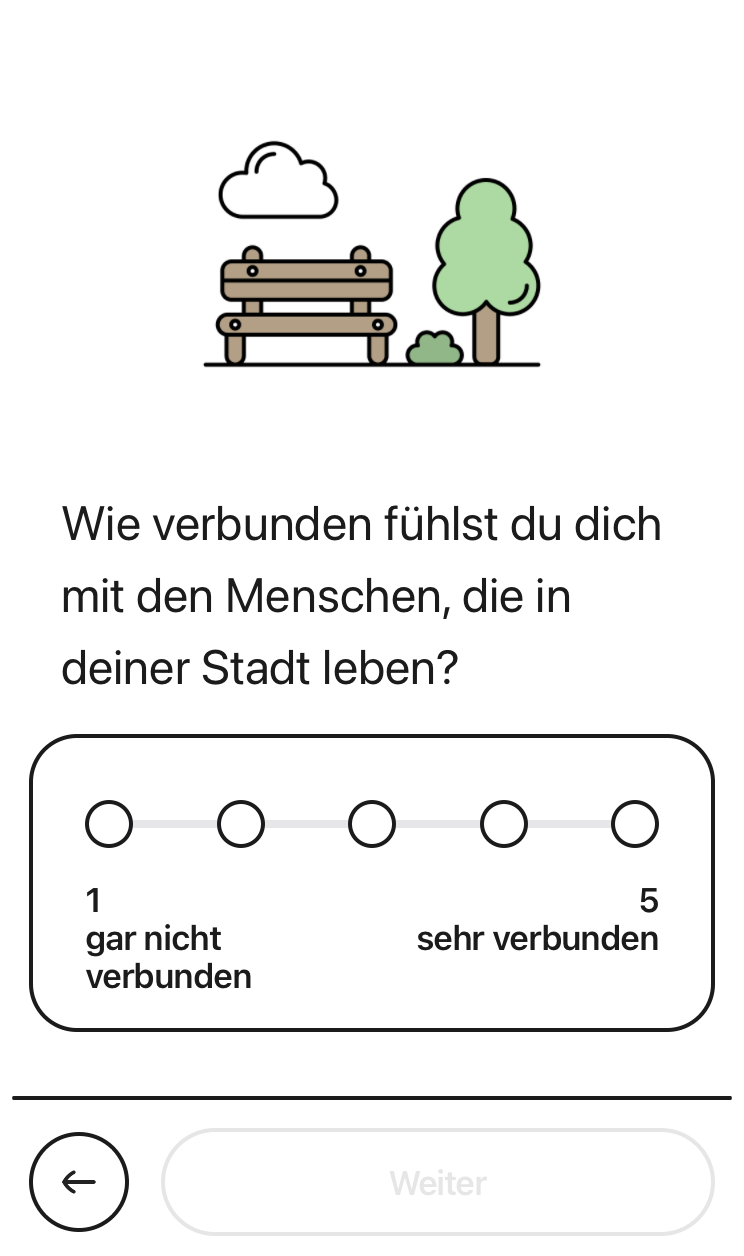
Wenn du an der Studie teilnimmst, begleitet dich unsere App eine Woche lang durch deinen Alltag in der Stadt. Wir bitten dich, 7 Tage lang bis zu dreimal täglich einen kurzen Fragebogen auszufüllen. Wir fragen dich nach...
…deinem aktuellen emotionalen Wohlbefinden,
…wie deine Umgebung deine Emotionen beeinflusst,
…wie du deine Umgebung gerade empfindest (überfüllt, laut oder vielleicht sehr grün?),
…ein Foto des Gegenstands oder Objekts, das deine Emotionen gerade am stärksten beeinflusst.
Außerdem erfassen wir bei jeder Umfrage Ihren aktuellen Standort (natürlich nur, wenn Sie uns dies zuvor in den Einstellungen gestattet haben!). Anhand der GPS-Daten ergänzen wir dann jede Ihrer Antworten um Umgebungsdaten – zum Beispiel zum aktuellen Wetter, zum Verkehr oder zur Luftverschmutzung an Ihrem Standort.
Machen Sie mit und laden Sie die neue „Citizen Scientist“ app herunter!
Deine Emotionale Stadt - Das Berliner Citizen Science Projekt

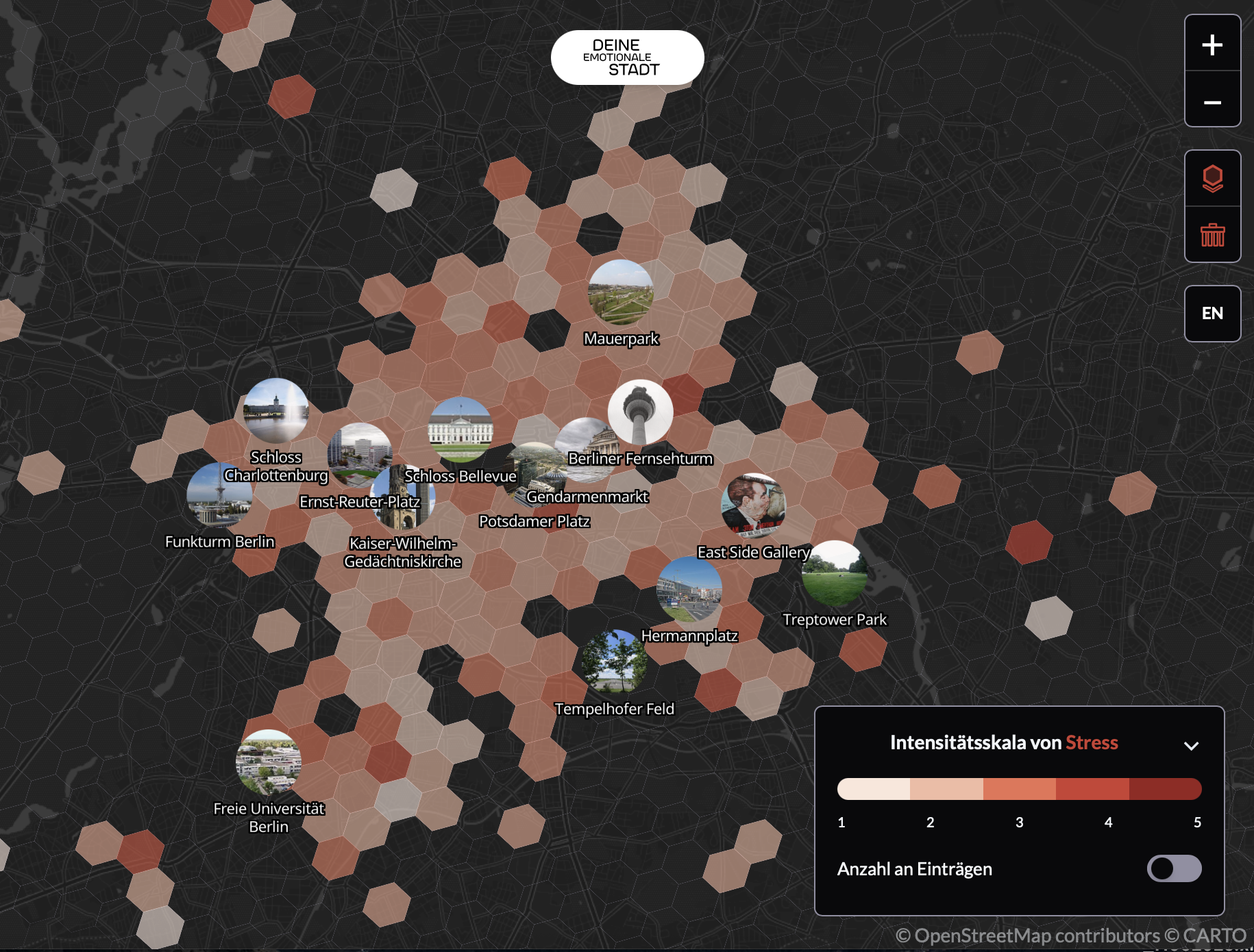
Entdecken Sie unsere erste Karte der Emotionen!
Klicken Sie hier, um die erste Präsentation der Daten zu „Deine Emotionale Stadt“ in Berlin durch unseren Projektpartner Open Data Informationsstelle Berlin zu sehen, und entdecken Sie, wie Emotionen und Umgebung in Berlin zusammenwirken.
“Deine Emotionale Stadt” is where science is collaborative and participation is open to everyone.

Learn more about Citizen Science in Berlin
Citizen Science is research conducted with participation from the general public, nonprofessional researchers, or participants in science, social science, urban planning, and many other disciplines. Citizen science can be used as a methodology where public volunteers help in collecting and classifying data, improving the scientific community's capacity. Participation in citizen science projects also educates the public about the scientific process and increases awareness about different topics.
The citizen science strategy of “Deine Emotionale Stadt" (Your Emotional City) centers on creating a participatory platform where citizens play an integral role in the project’s design, implementation, and outcomes, making it a project not just for citizens but also with them at its core.
Utilizing Ecological Momentary Assessment (EMA) methods, the project invites citizens to contribute to real-time, context-sensitive data collection about their emotional experiences within urban spaces. This citizen-centered approach seeks to improve mental health by understanding the emotional effects of various urban settings, bridging academia, medical institutions, society, and policy into ongoing dialogue.
The project adopts an interdisciplinary approach, combining psychology, urban planning, sociology, and digital tools to create a holistic framework for assessing urban mental well-being. Rather than simply viewing citizen science as a recruitment tool, "Deine Emotionale Stadt" makes it the project's foundation, fostering active community involvement and shaping research outcomes to reflect the lived experiences of the population.

Deine emotionale Stadt - Mitforschen an der Stadt der Zukunft
Cities trigger emotions in us – pleasant and unpleasant. On the one hand, they offer opportunities for development, culture, and prosperity. They are political, economic, and scientific centers. But they also have another side, they are often anonymous or dirty, they contain injustice, crime and violence. Cities stimulate us, and they challenge us. Sometimes, they cause stress. Some even make them sick. But they also fascinate us. Everything has an impact on our psyche and health.
In the Citizen Science project “Deine Emotionale Stadt,” we want to find out how citizens feel, decipher the feelings in specific streets, squares, neighborhoods, and parks, and gain insights into cities in general. Together, we will find out what will make cities of the future places worth living in.
“Deine Emotionale Stadt” is a joint project of Interdisziplinäres Forum Neurourbanistik e. V., Charité – Universitätsmedizin Berlin, Humboldt-Universität zu Berlin, Futurium – House of the Futures and Open Data Informationsstelle Berlin. Funded by the Berlin University Alliance as part of the Excellence Strategy of the German federal and state governments.
Learn more about the objectives of the project “Deine Emotionale Stadt” with Dr. Shadi Bagherzadeh Azbari: ‘https://futurium.de/de/blog/wir-erfassen-die-gefuehle-der-menschen-in-echtzeit
Engagements
-
![]()
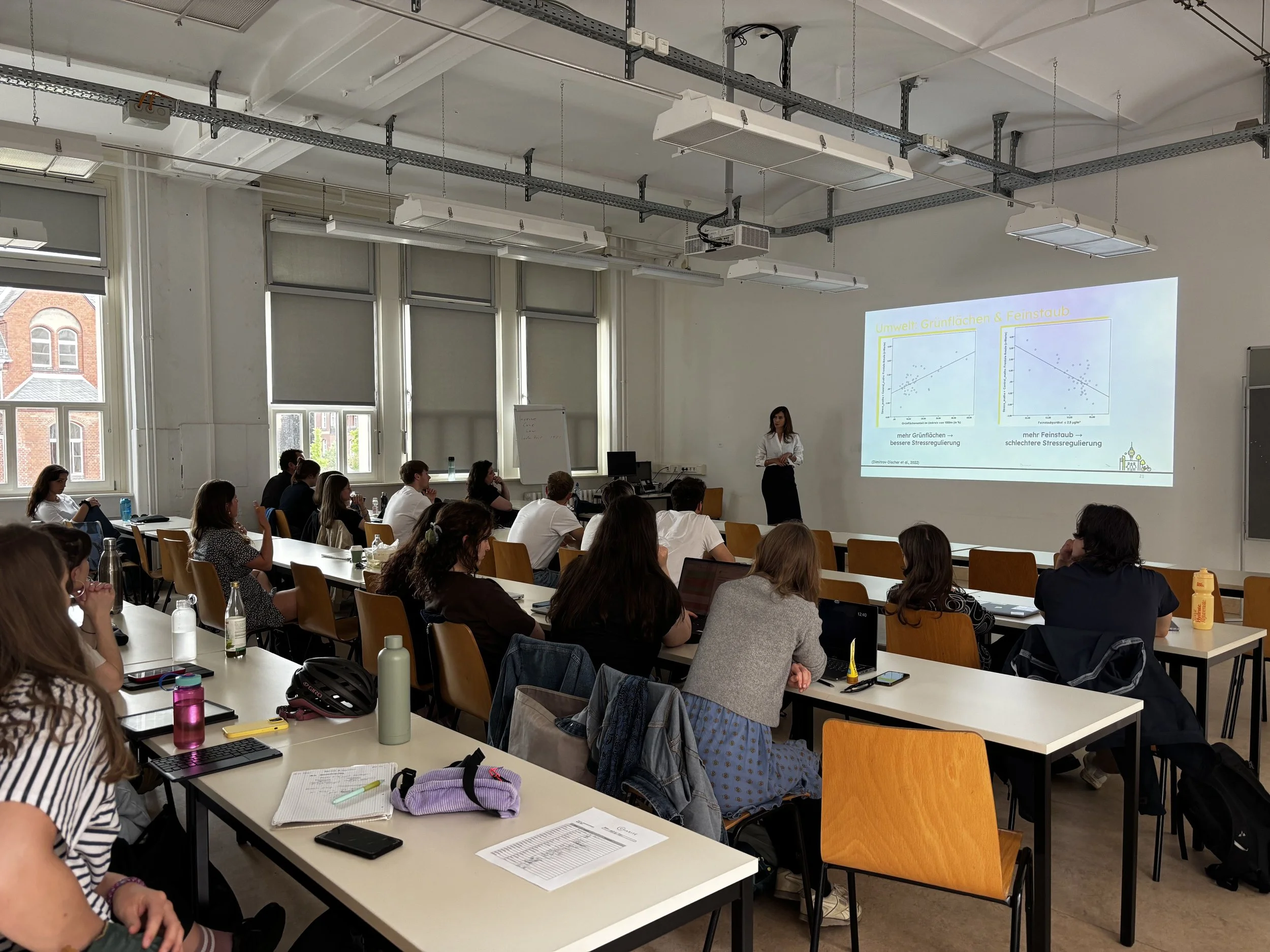
Seminar "Wie die Stadt auf unsere Psyche wirkt"
As part of a seminar at Charité, Dr. Shadi Bagherzadeh Azbari and Sephira Kolbe introduced Master’s students in the Public Health program to the topic “How Cities Affect Our Mental Health.” The seminar explored the relationship between urban environments and psychological well-being, focusing on factors such as stress, isolation, population density, social environments, and access to green spaces. Through scientific evidence, practical examples, and interactive discussions, participants gained insights into how urban design and planning can contribute to promoting mental health and improving public health outcomes.
-
![]()
Charité Research Day 2026
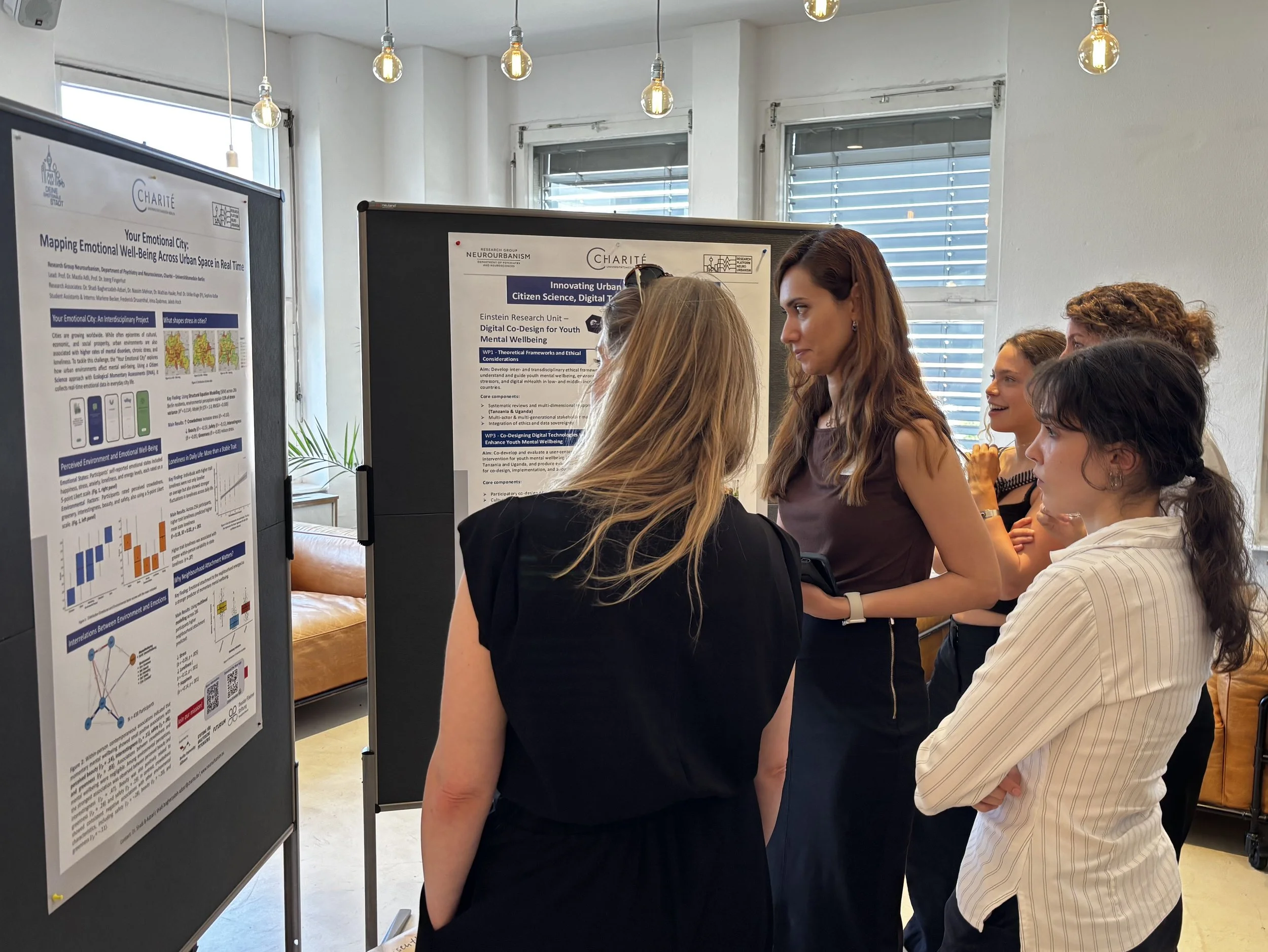
On 29 May 2026, Dr. Shadi Bagherzadeh Azbari and Frederick Drusenthal presented our ongoing research project Deine Emotionale Stadt and the newly developed Citizen Scientist App at Charité Research Day 2026 in Berlin-Neukölln. The project attracted considerable interest from visitors, highlighting the growing public engagement with and awareness of urban mental health. The lively response underscored the relevance of understanding how urban environments shape emotional well-being and demonstrated strong public interest in citizen-driven approaches to mental health research.
-
![]()
Grand Challenges Conference 2026
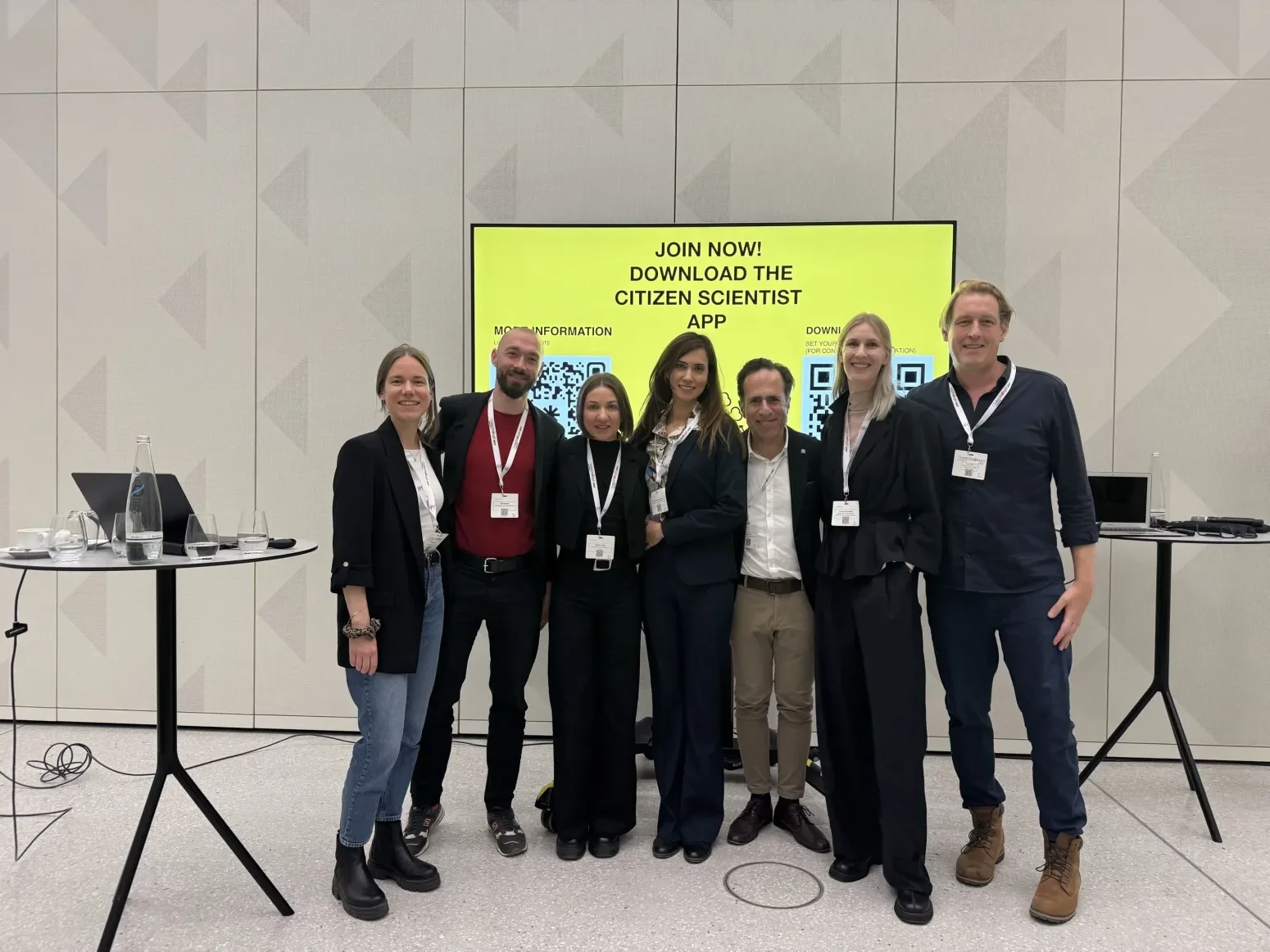
At the 2026 BUA Grand Challenges Conference 2026, Dr. Shadi Bagherzadeh Azbari, Sephira Kolbe, Prof. Dr. Mazda Adli, Felix Bentlin, and Dr. Corinna Kühnapfel presented new research on how urban environments shape emotional experience and well-being in Berlin.
We introduced a new version of the Your Emotional City app, which captures how people experience the city across places, situations, and times of day through in-the-moment reports. The project explores not only which urban environments feel stressful or restorative, but also for whom and under which conditions — examining how factors such as greenery, social belonging, safety, and aesthetic qualities like beauty and interestingness influence well-being.
We also presented a comparative field study on public art in dense urban environments. By placing the same large-scale art installation in two contrasting Berlin locations — a green pedestrian promenade and a traffic-dominated boulevard — we found that the intervention increased perceived beauty, invitingness, and belonging across both sites.
-
![]()
Stress & the City: (Ein-)Blick in die Welt der Neurourbanistik
Talk with Oliver Hauke
January 22th, 2026 at KLICK Kino
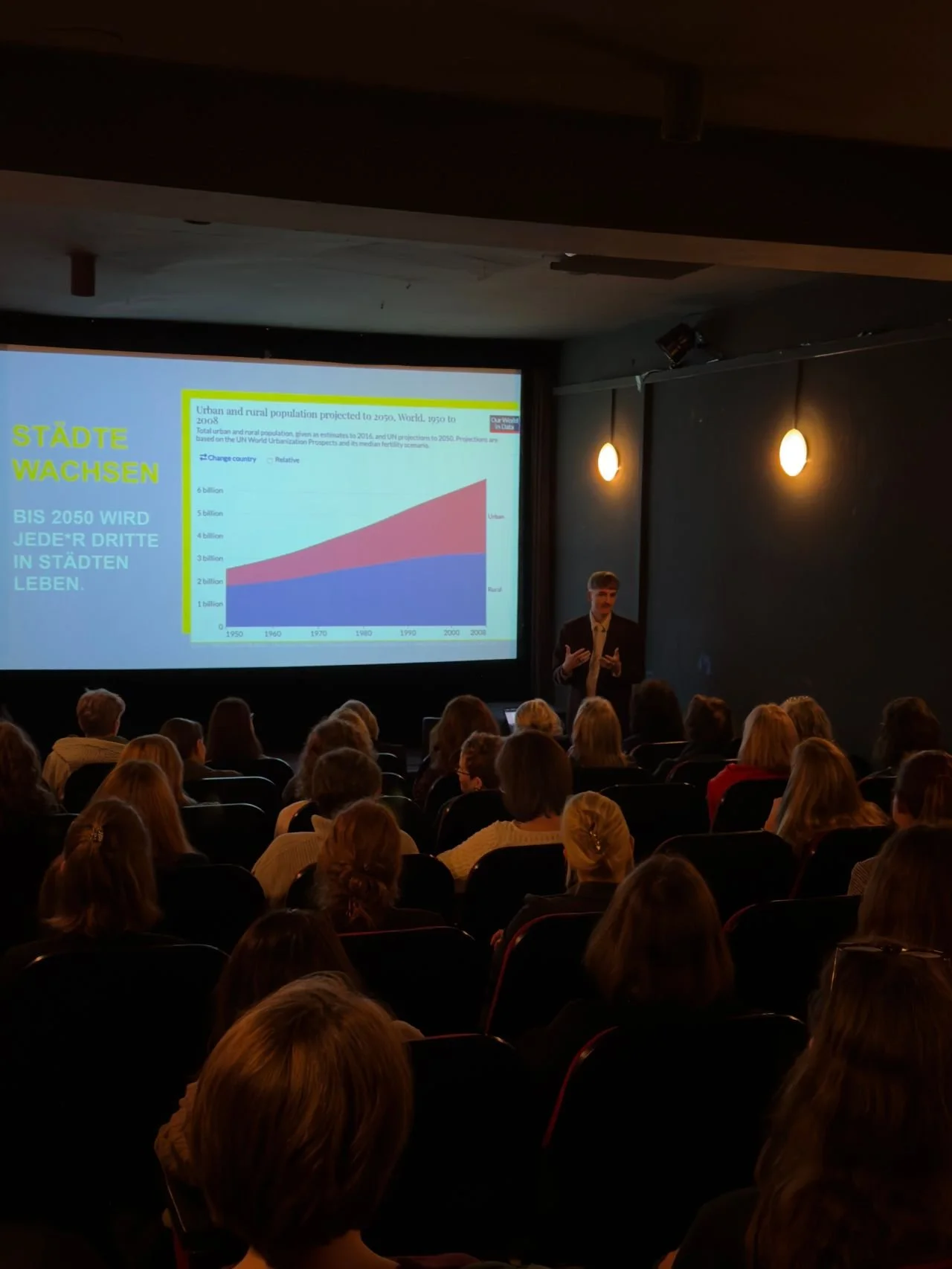
Oliver Hauke gave a talk titled “Stress & the City: A Glimpse into the World of Neurourbanism” as part of the Immofrauen New Year’s event at the KLICK Kino in Berlin Charlottenburg. He introduced the research project “Your Emotional City”. The presentation focused on how urban environments influence mental health and which factors shape emotional experiences in cities.
(Photo by: ImmoFrauen e.V.)

Lange Nacht der Wissenschaft - 2024 © David von Becker

Lange Nacht der Wissenschaft - 2024 © David von Becker

Green and the City - Panel Talk - 2022 © David von Becker
Urban Stress and Mental Health - 2025 © Cäcilia Taddia

Berlin 2025 - Workshop Futurium © Michael Schulte

Berlin 2025 - Workshop Futurium © Michael Schulte

Berlin 2025 - Workshop Futurium © Michael Schulte

Berlin 2025 - Workshop Futurium © Michael Schulte
Berlin 2025 - Workshop Futurium © Michael Schulte

Berlin 2025 - Workshop Futurium © Michael Schulte

Berlin 2025 - Workshop Futurium © Michael Schulte

Berlin 2025 - Workshop Futurium © Michael Schulte

Lange Nacht der Wissenschaft - 2024 © David von Becker
Urban Stress and Mental Health - 2025 © Cäcilia Taddia
Artificial Intelligence in Science -WINS 2025 © Philipp Plum
Artificial Intelligence in Science -WINS 2025 © Philipp Plum
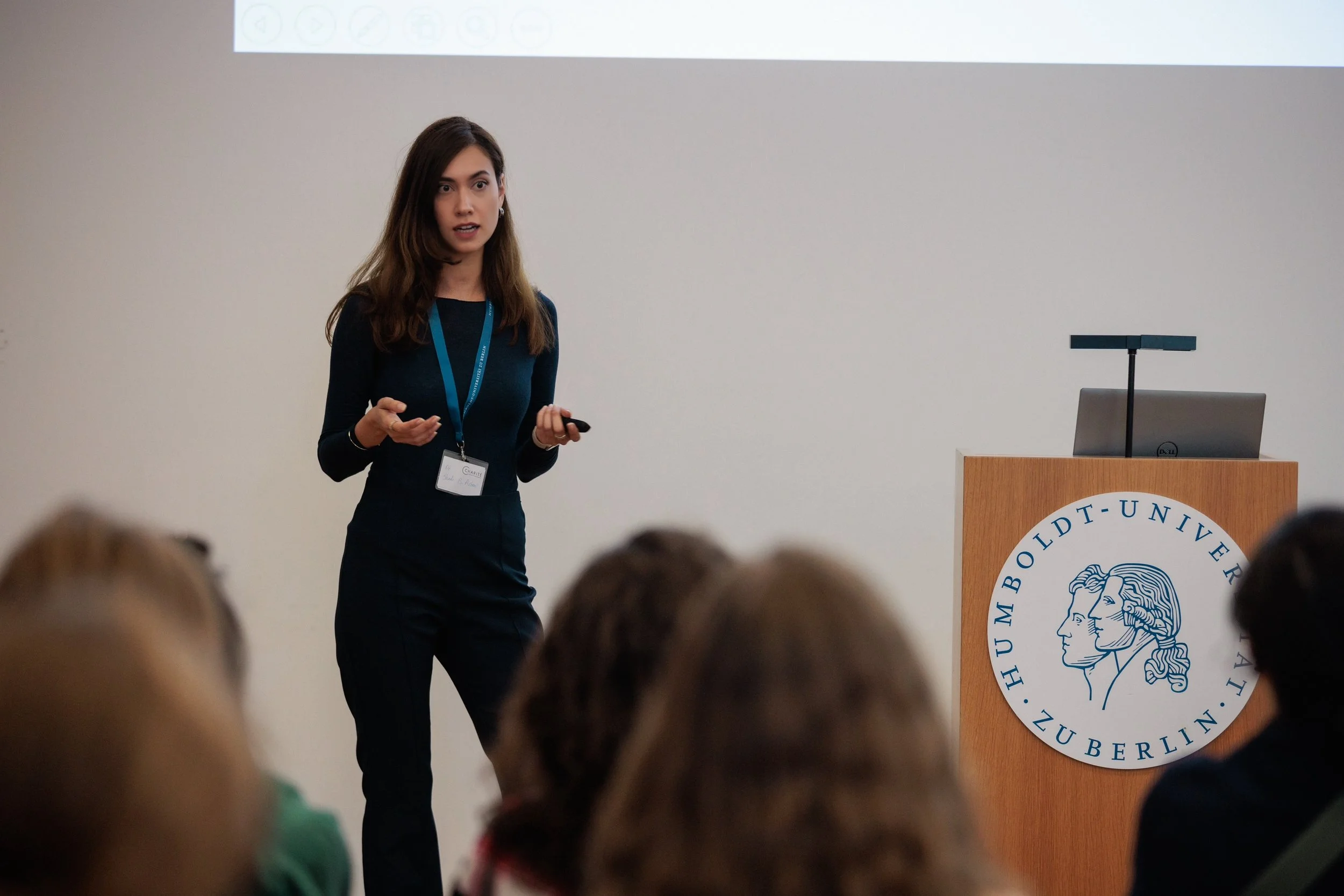
Artificial Intelligence in Science -WINS 2025 © Philipp Plum
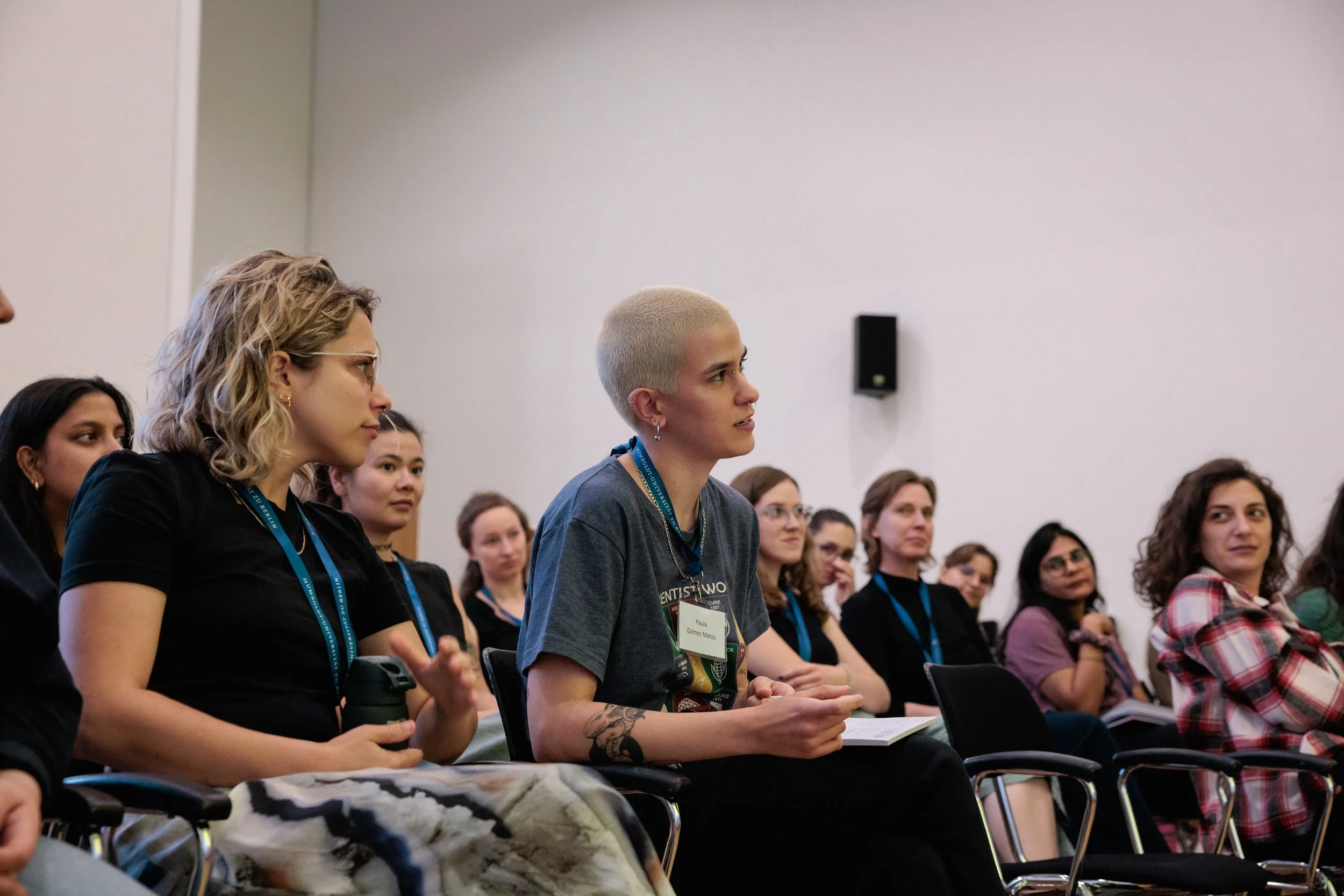
Artificial Intelligence in Science -WINS 2025 © Philipp Plum
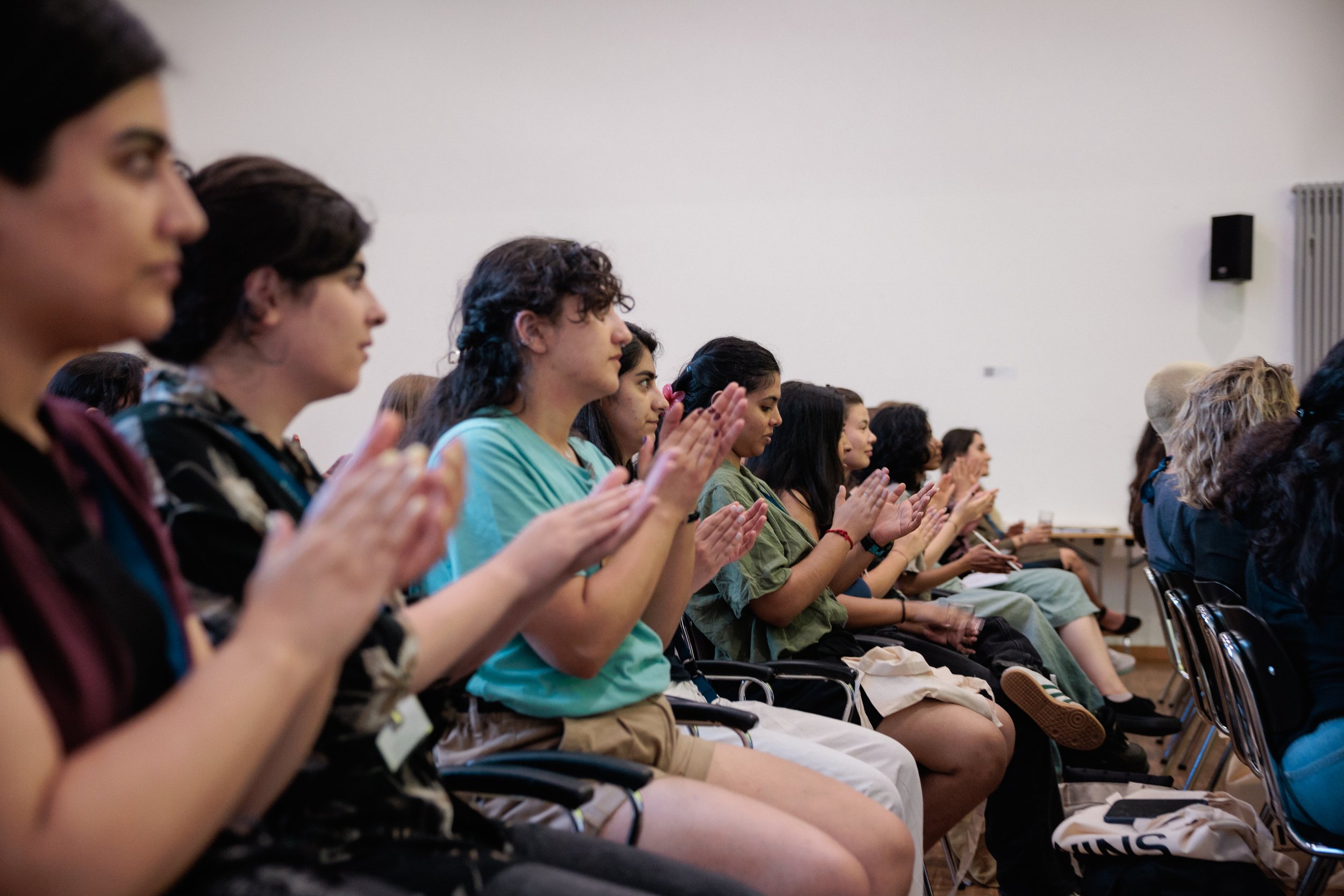
Artificial Intelligence in Science -WINS 2025 © Philipp Plum

Artificial Intelligence in Science -WINS 2025 © Philipp Plum
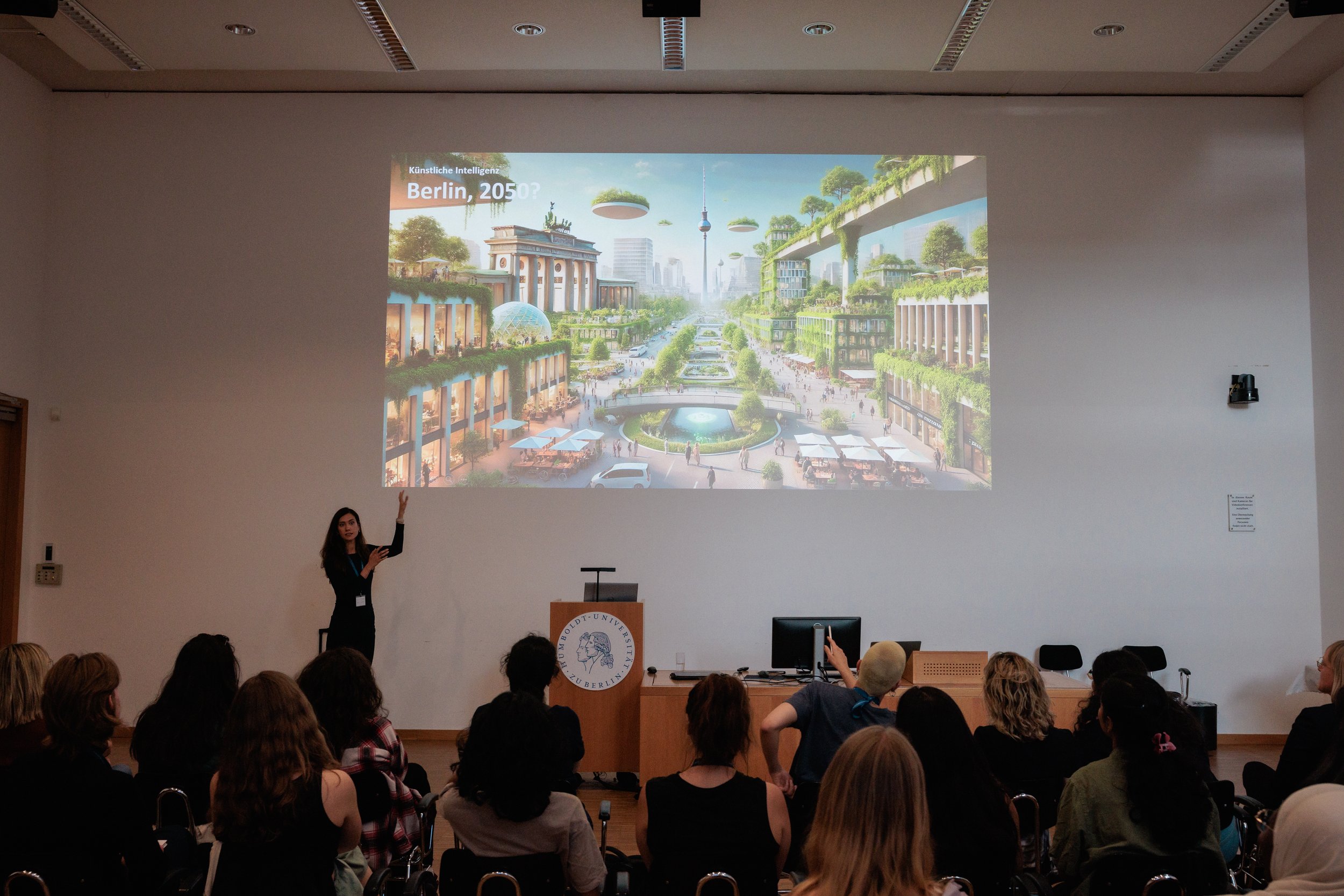
Artificial Intelligence in Science -WINS 2025 © Philipp Plum

Artificial Intelligence in Science -WINS 2025 © Philipp Plum
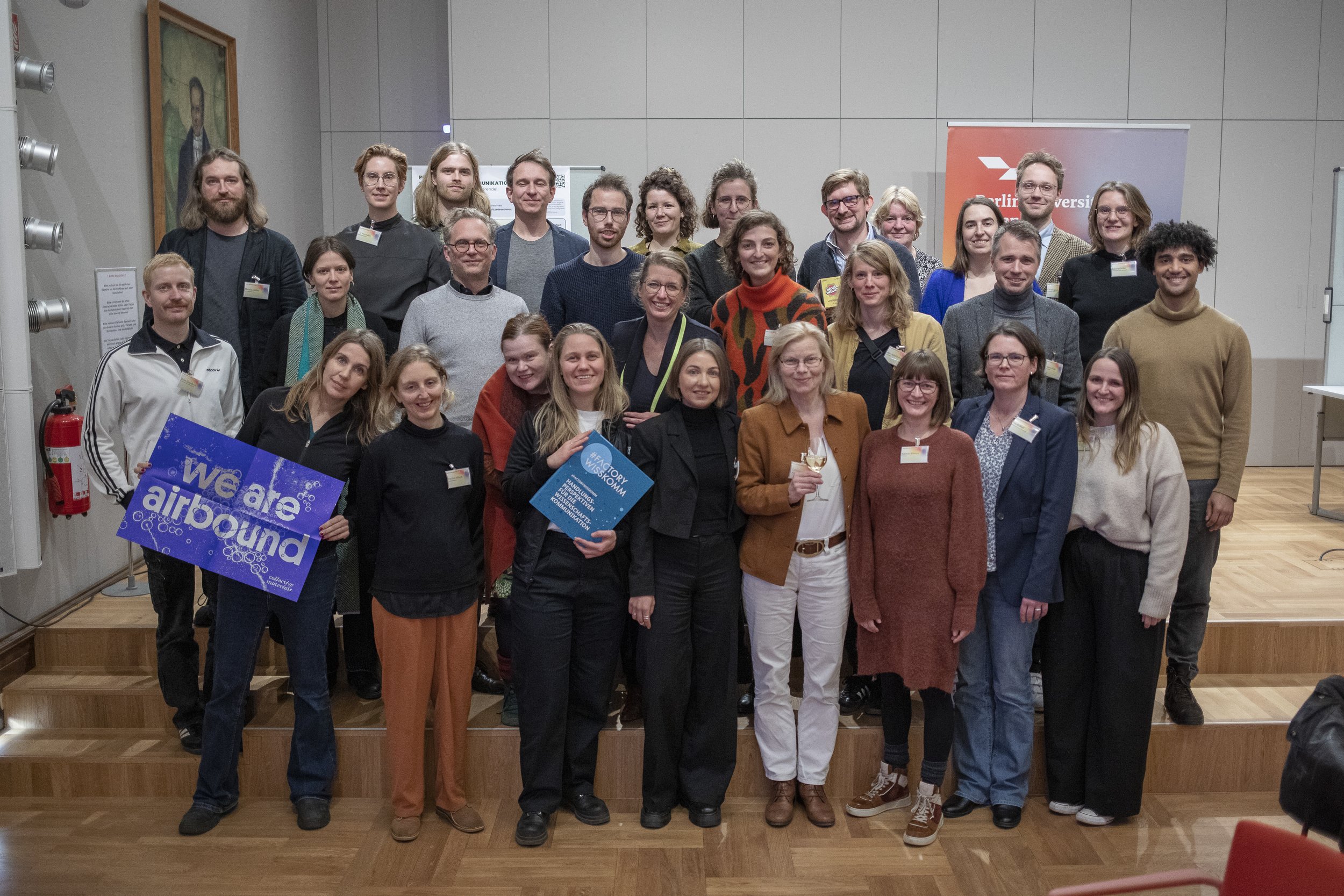
Experimentierfeld Wissensaustausch: Brücken bauen durch Kommunikation und Kreativität BUA © Samuel Monigatti

Lange Nacht der Museen 2025 - © Alina Habert

Lange Nacht der Museen 2025 - © Alina Habert
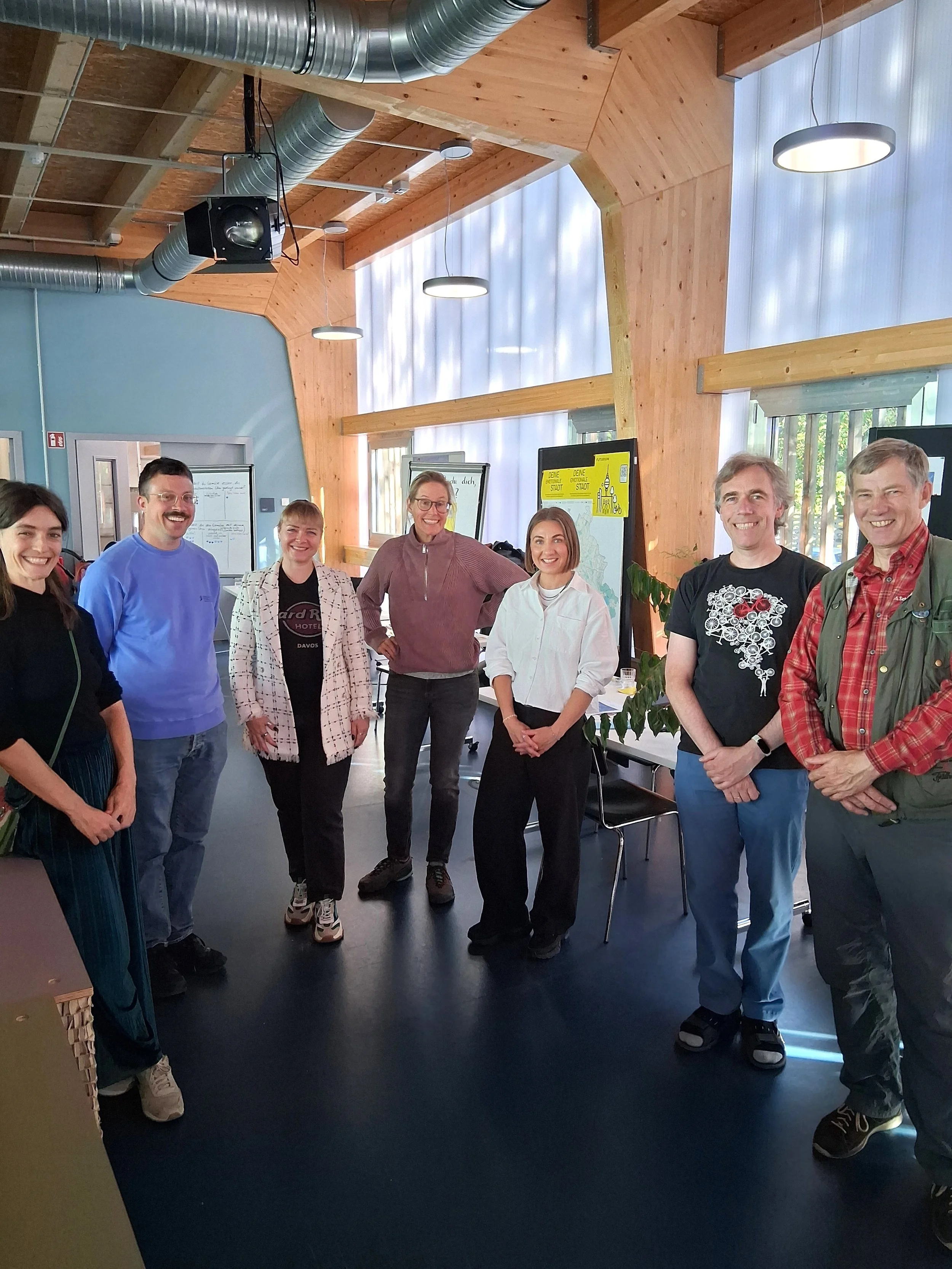
MITMACHTAG ZLB - 2025 © ZLB
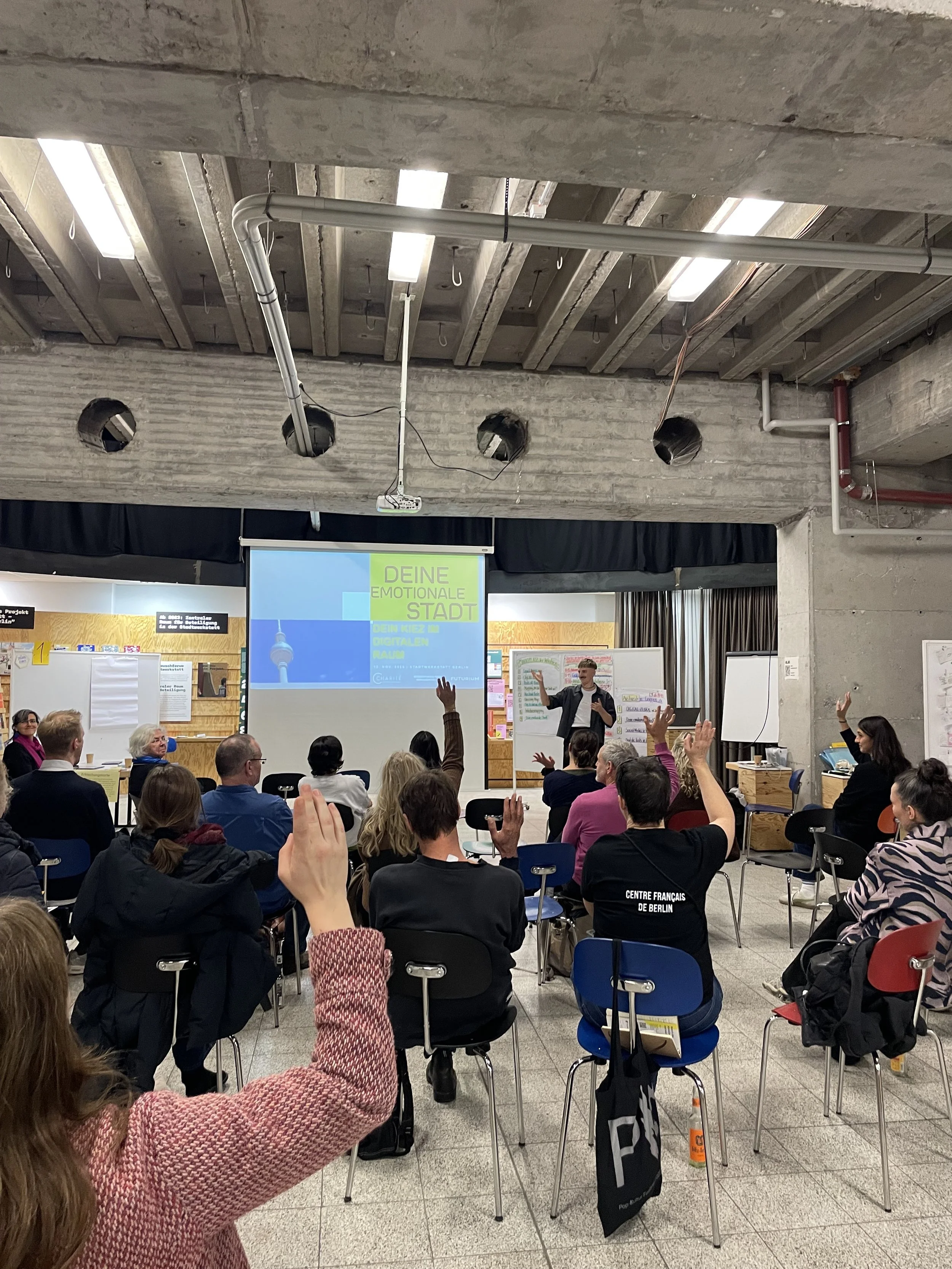
Dein Kiez im Digitalen Raum - 2025 © Cäcilia Taddia
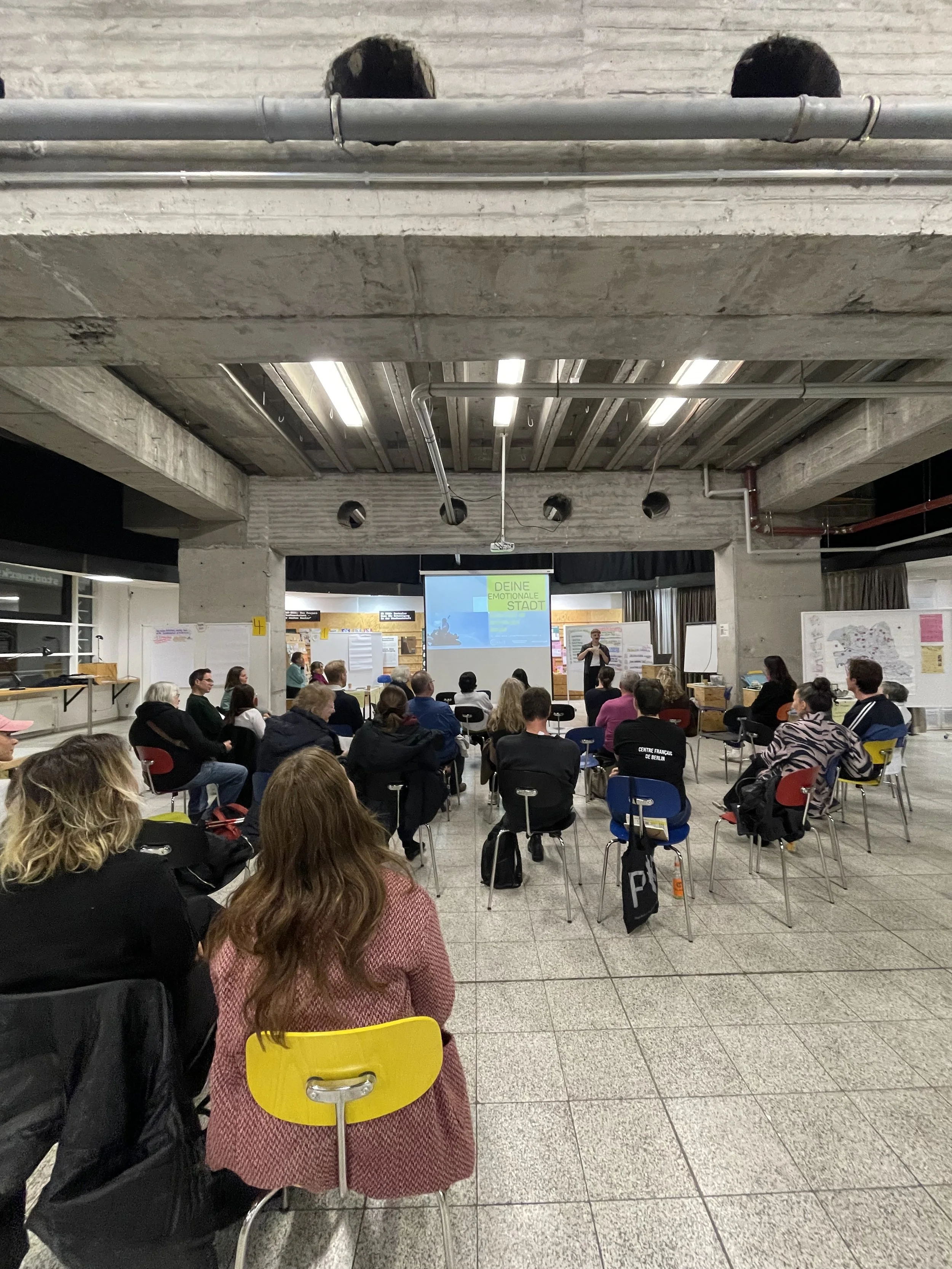
Dein Kiez im Digitalen Raum - 2025 © Cäcilia Taddia
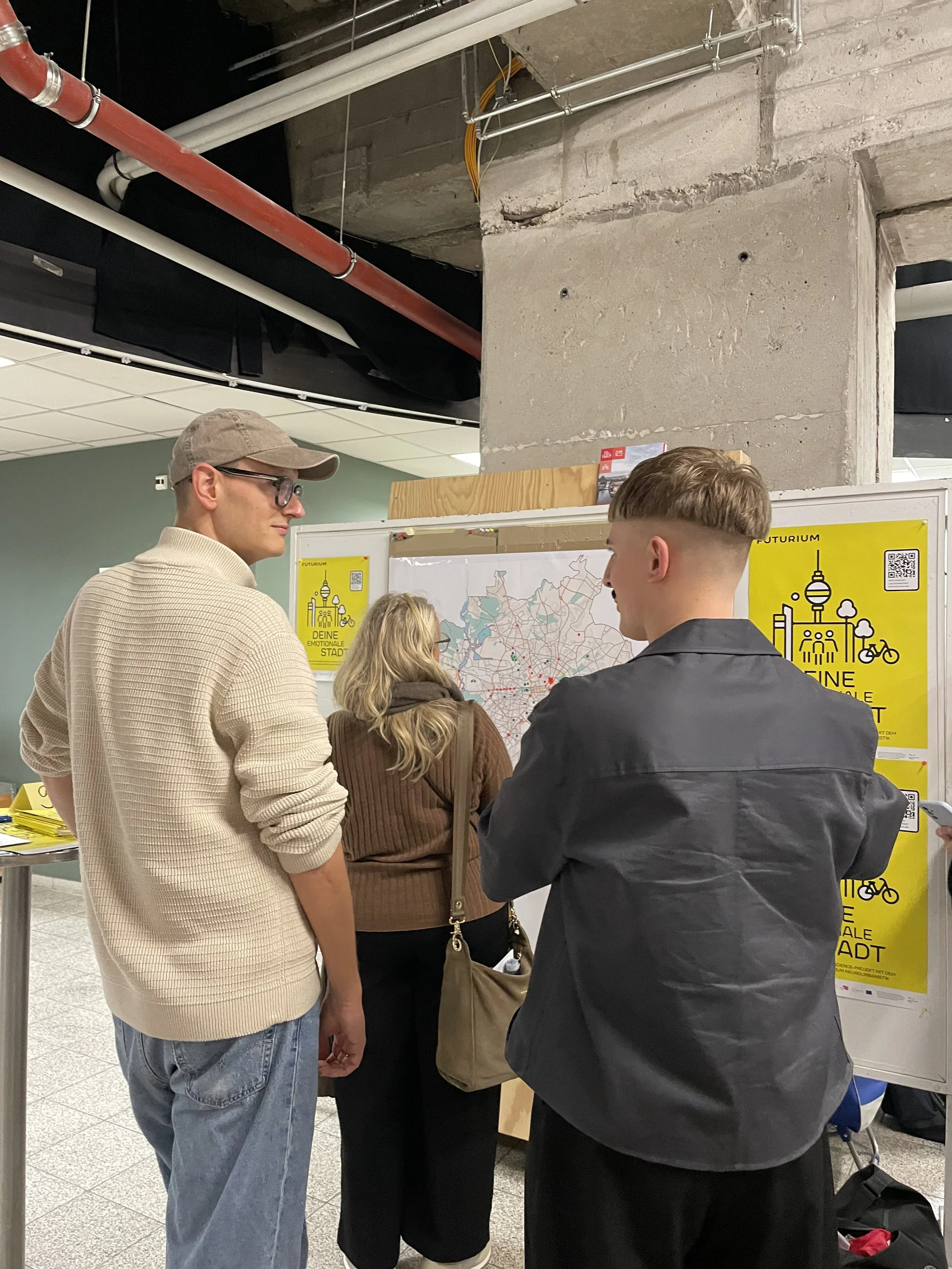
Dein Kiez im Digitalen Raum - 2025 © Cäcilia Taddia
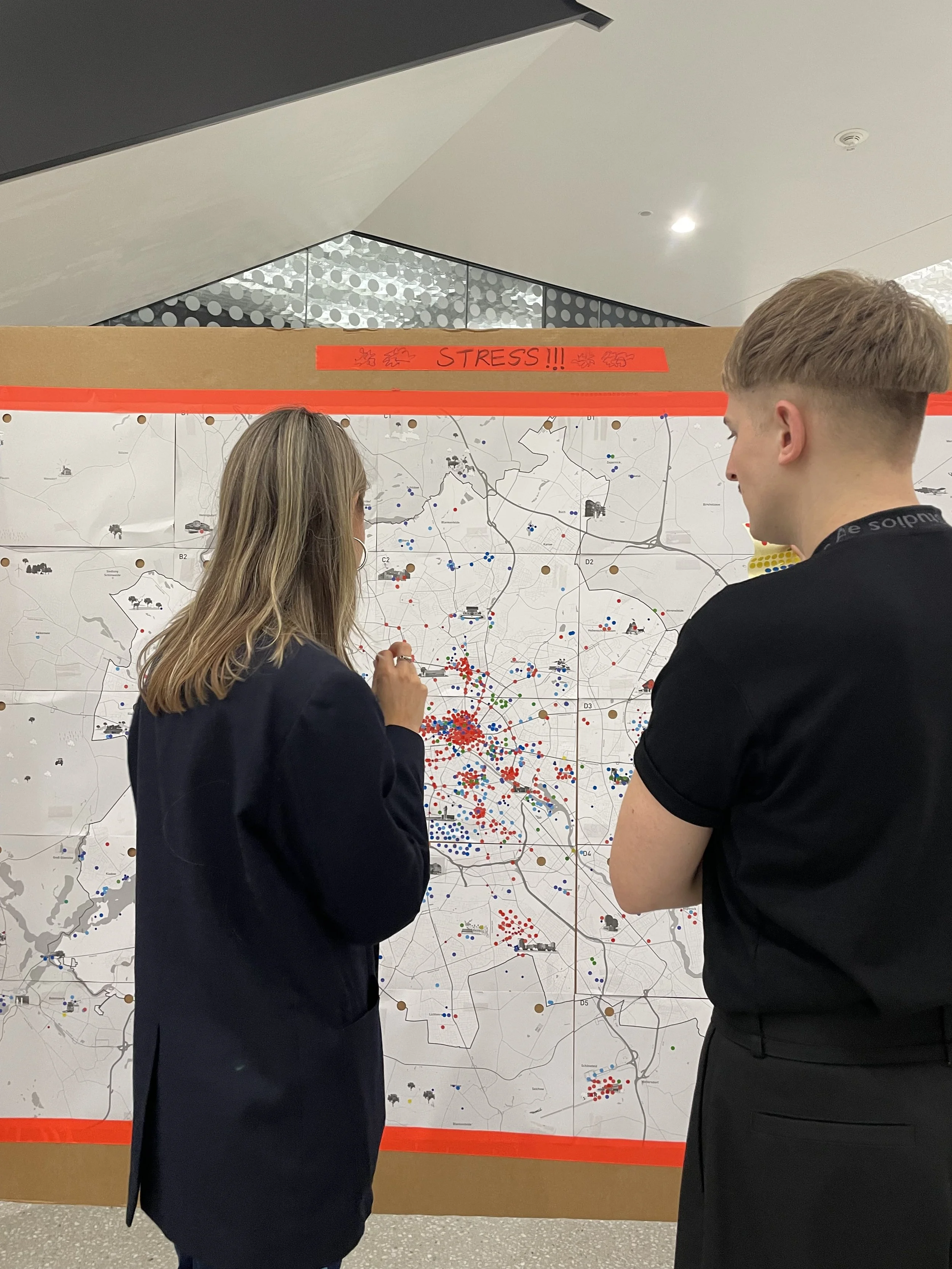
Berlin, du coole Stadt - 2025 © Cäcilia Taddia
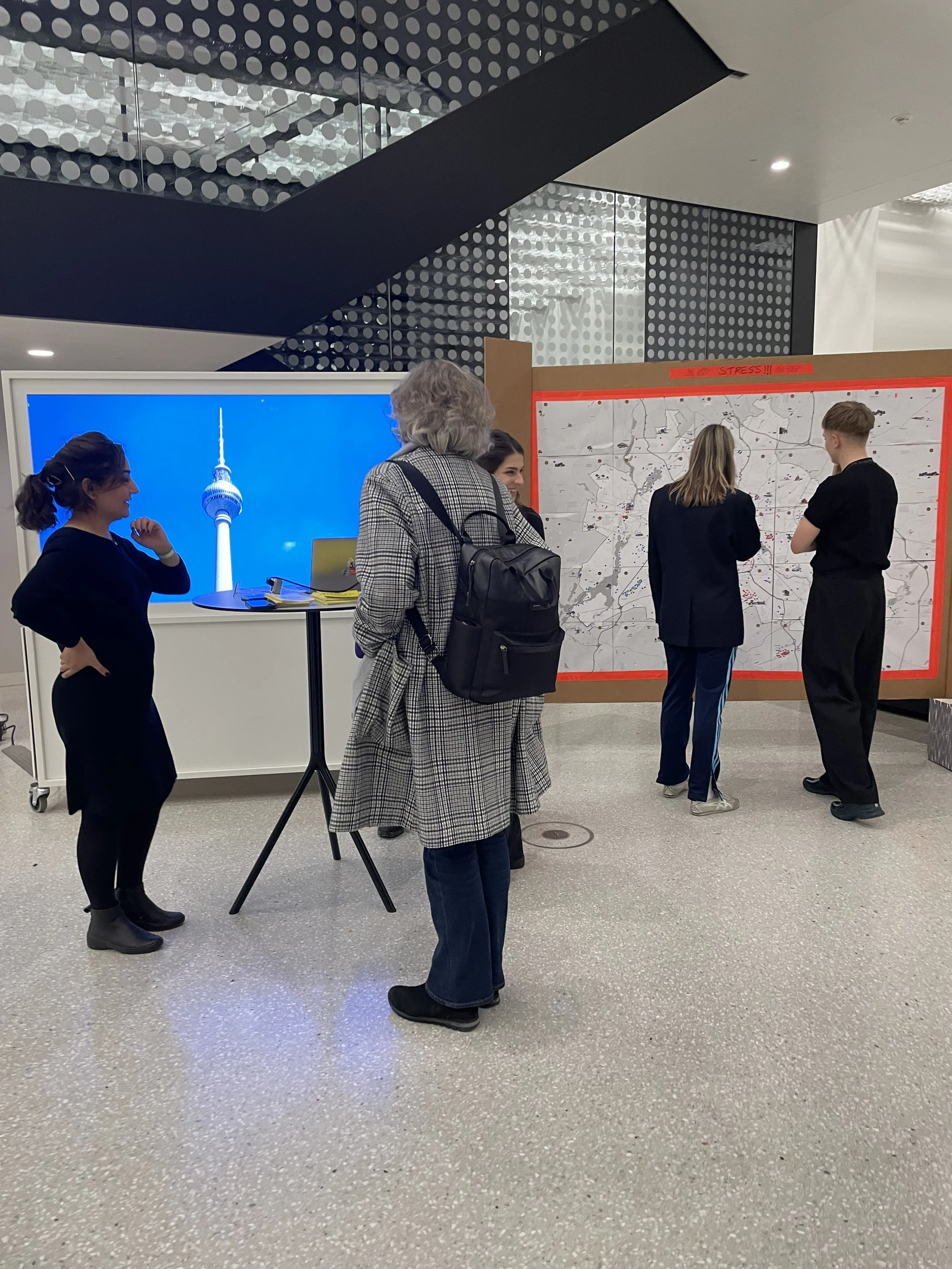
Berlin, du coole Stadt - 2025 © Cäcilia Taddia
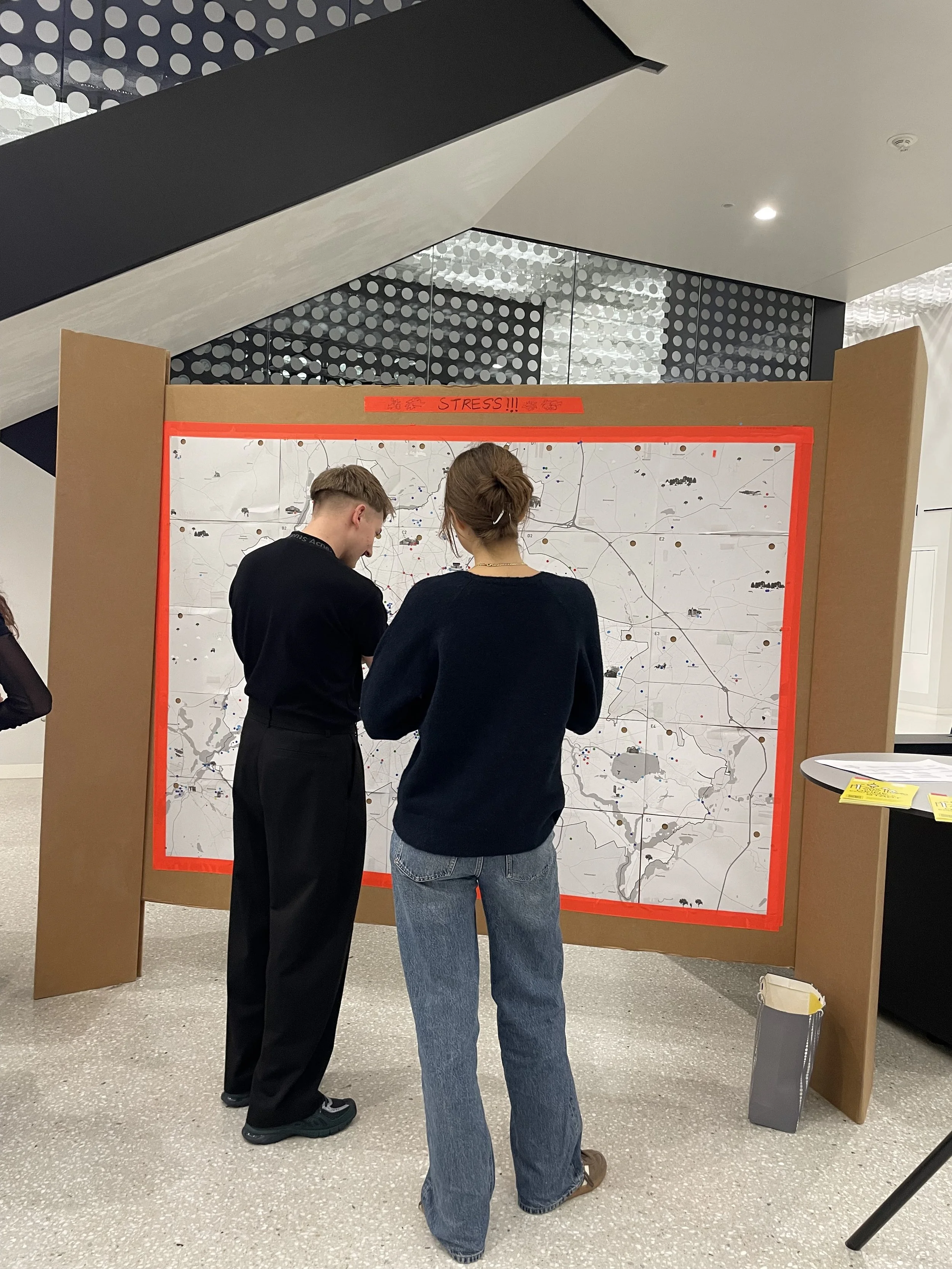
Berlin, du coole Stadt - 2025 © Cäcilia Taddia
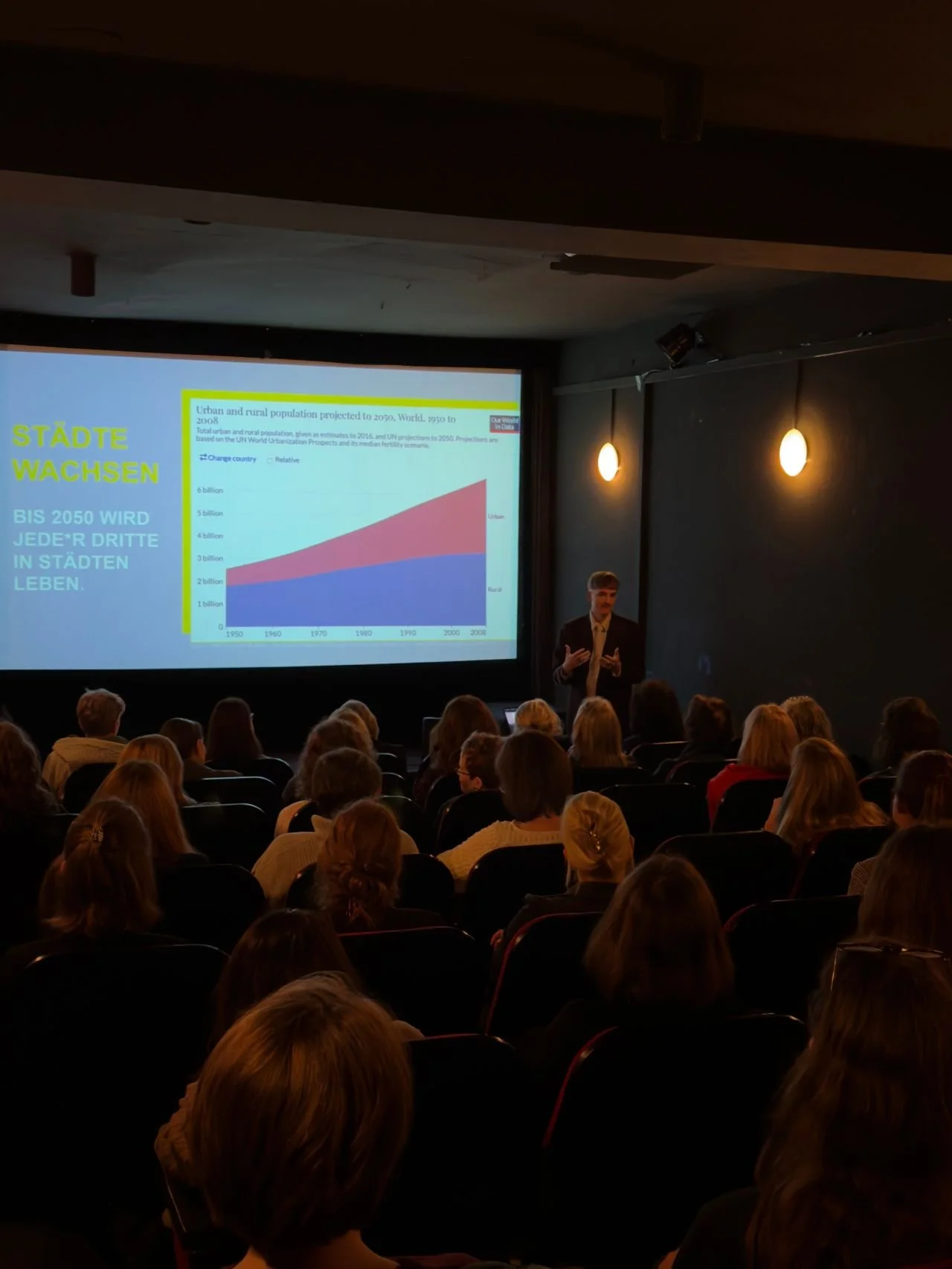
Stress & the City: (Ein-)Blick in die Welt der Neurourbanistik - 2026 © ImmoFrauen e.V.
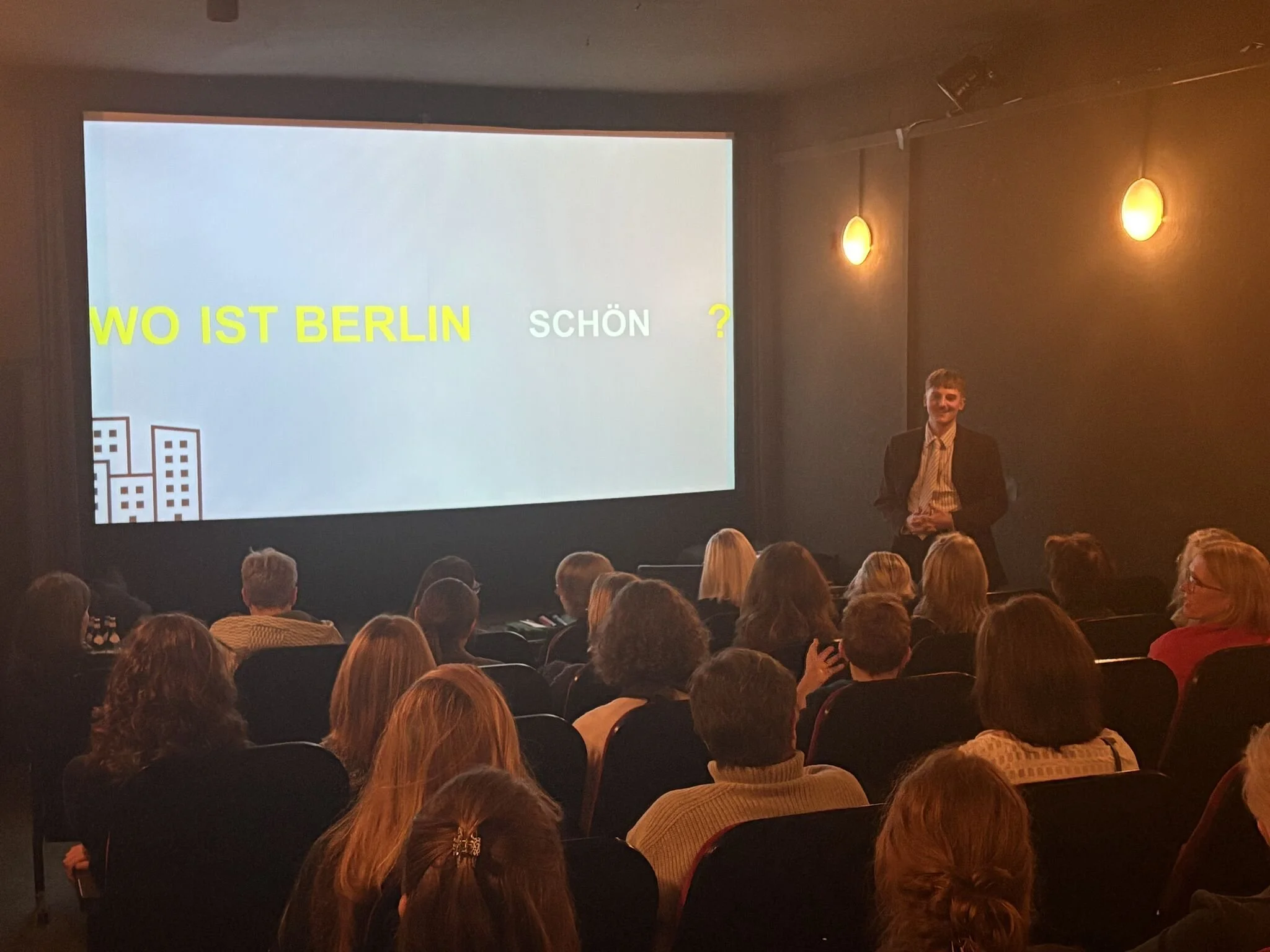
Stress & the City: (Ein-)Blick in die Welt der Neurourbanistik - 2026 © ImmoFrauen e.V.
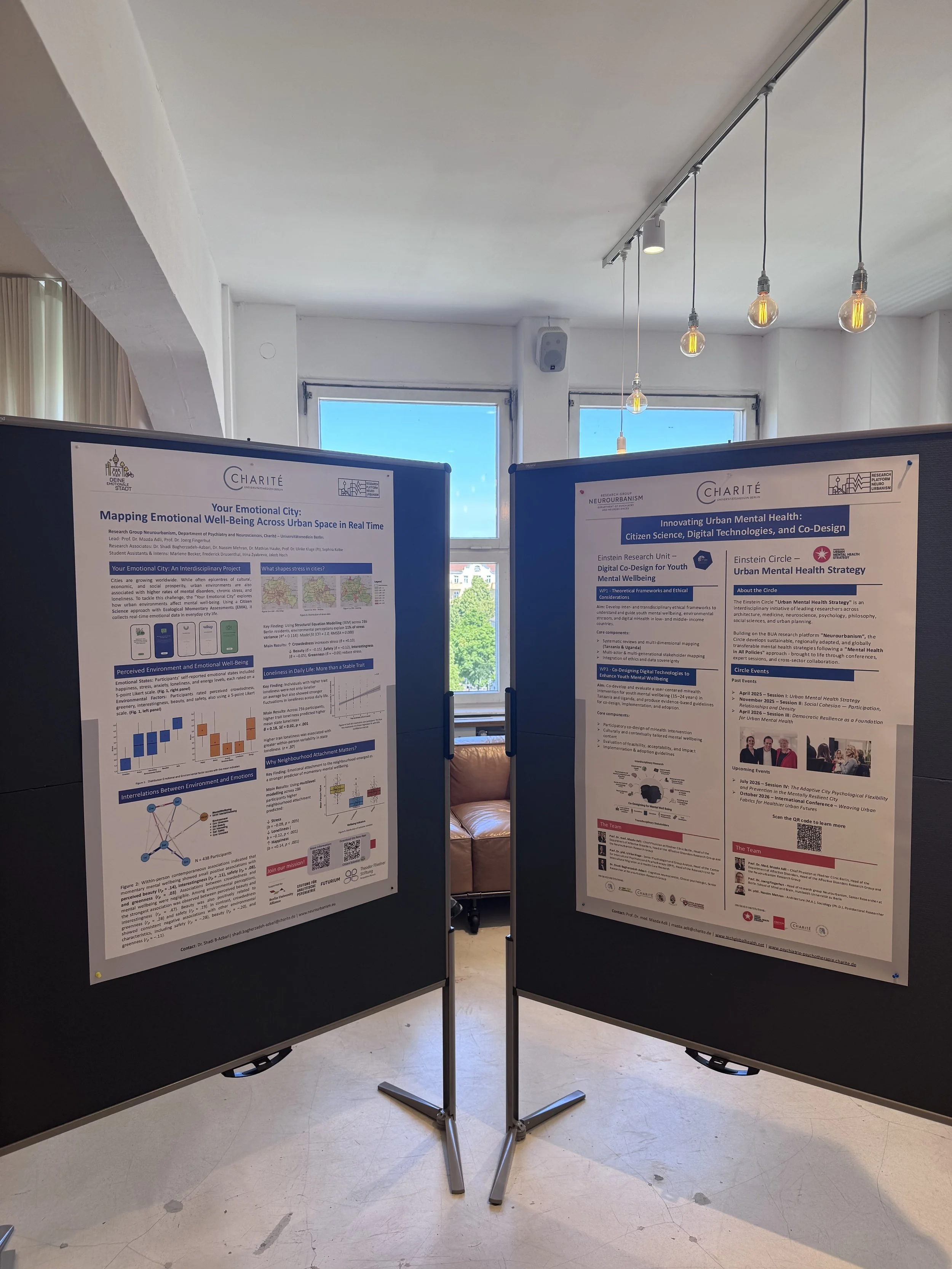
Charite Research Day 2026 - Our Posters © Shadi Bagherzadeh Azbari
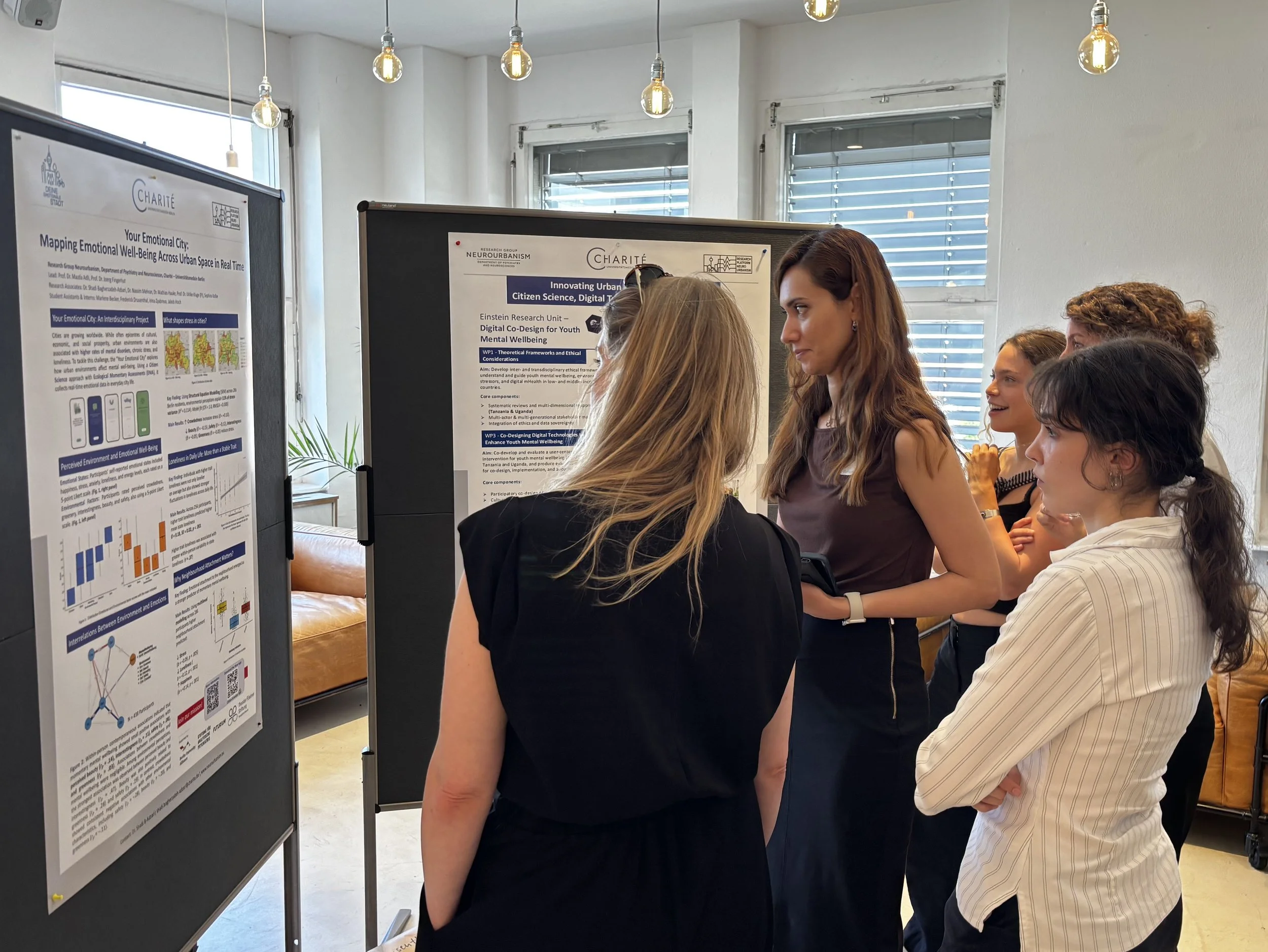
Charite Research Day 2026 © Frederick Drusenthal
Engagements 2025
-
![]()
BERLIN 2050 – WIE SIEHT DIE GESUNDE STADT DER ZUKUNFT AUS?
Workshop with Dr. Shadi Bagherzadeh Azbari
February 20th, 2025 at Futurium
Dr. Shadi Bagherzadeh Azbari, Senior Researcher of “Your Emotional City,” shared insights into the project’s vision. Attendees engaged in discussions on urban mental well-being, exploring scientific insights and initial study results. The event fostered an interactive exchange on urban development, stress, loneliness, and mental health.
(Photo by: Michael Schulte)
-
![]()
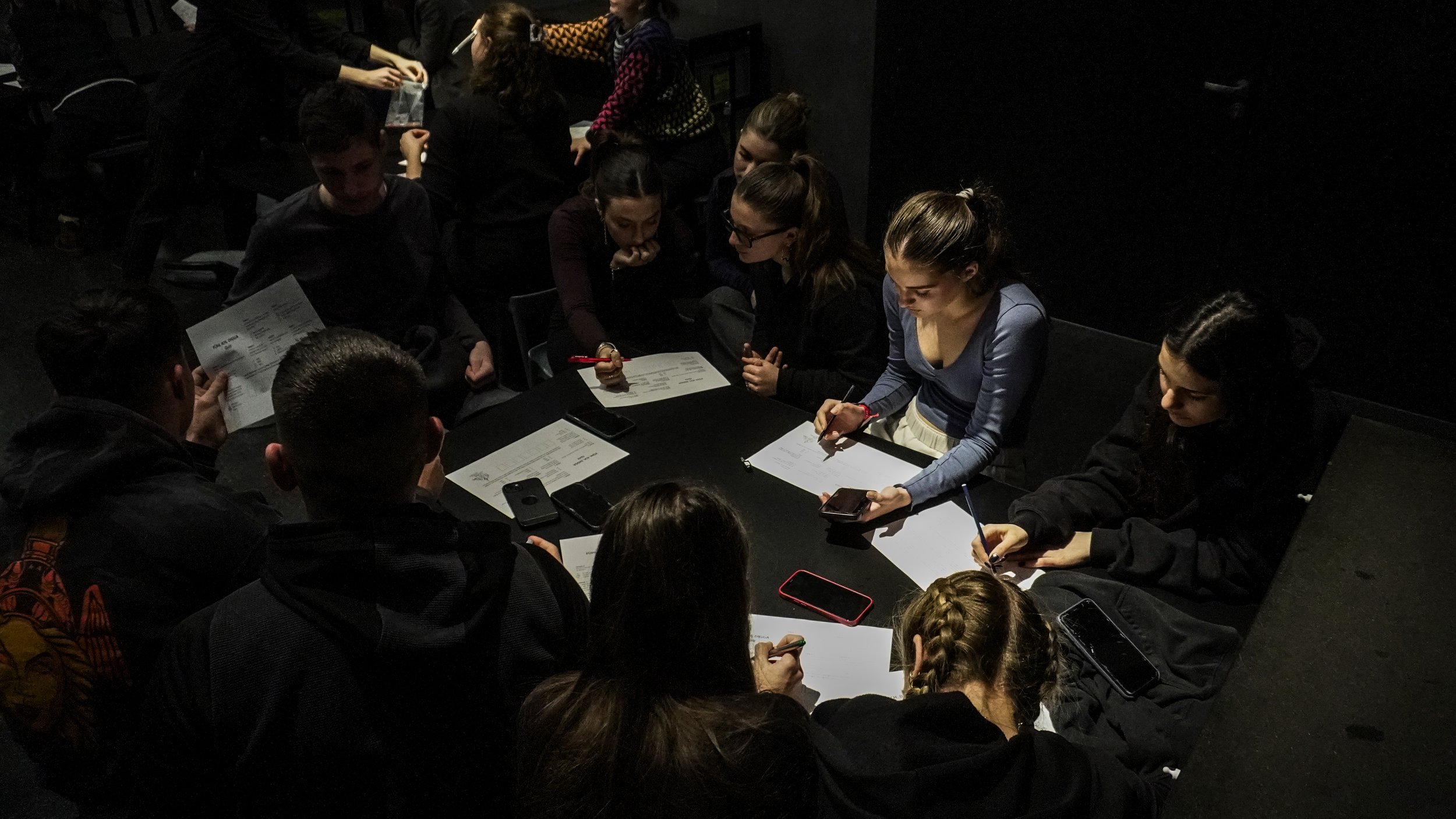
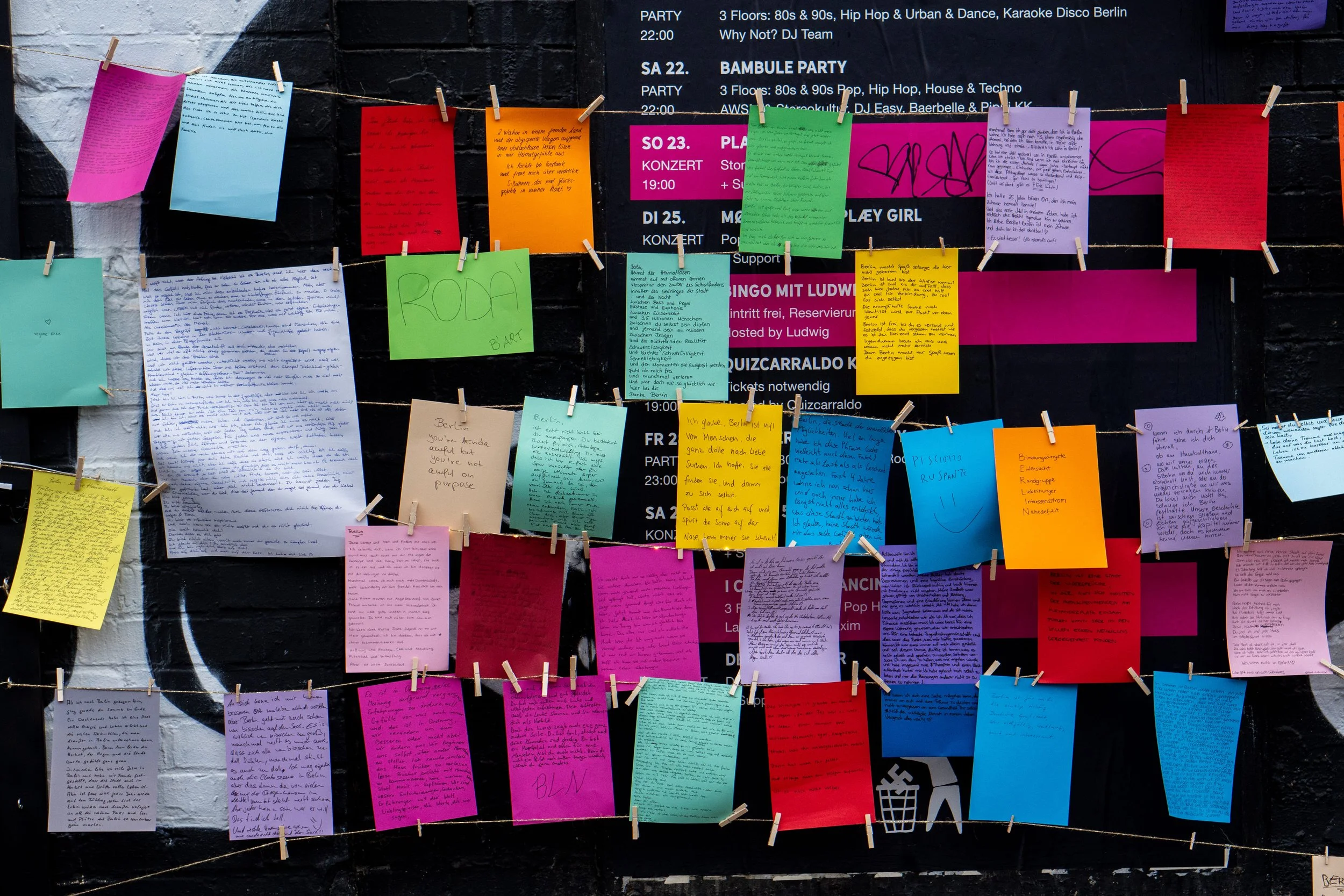
Stadt Emotionen sichtbar machen - Wie fühlst du dich Berlin?
Interactive event with Content-Creator Clara Lösel
March 29th, 2025 at R.A.W. Gelände
Over 120 visitors took the opportunity to record their emotions and experiences in the city of Berlin in handwritten notes on paper sheets. The event made it clear: the city of the future is built on the emotions of its residents.
(Photo by: Michael Schulte) -
![]()
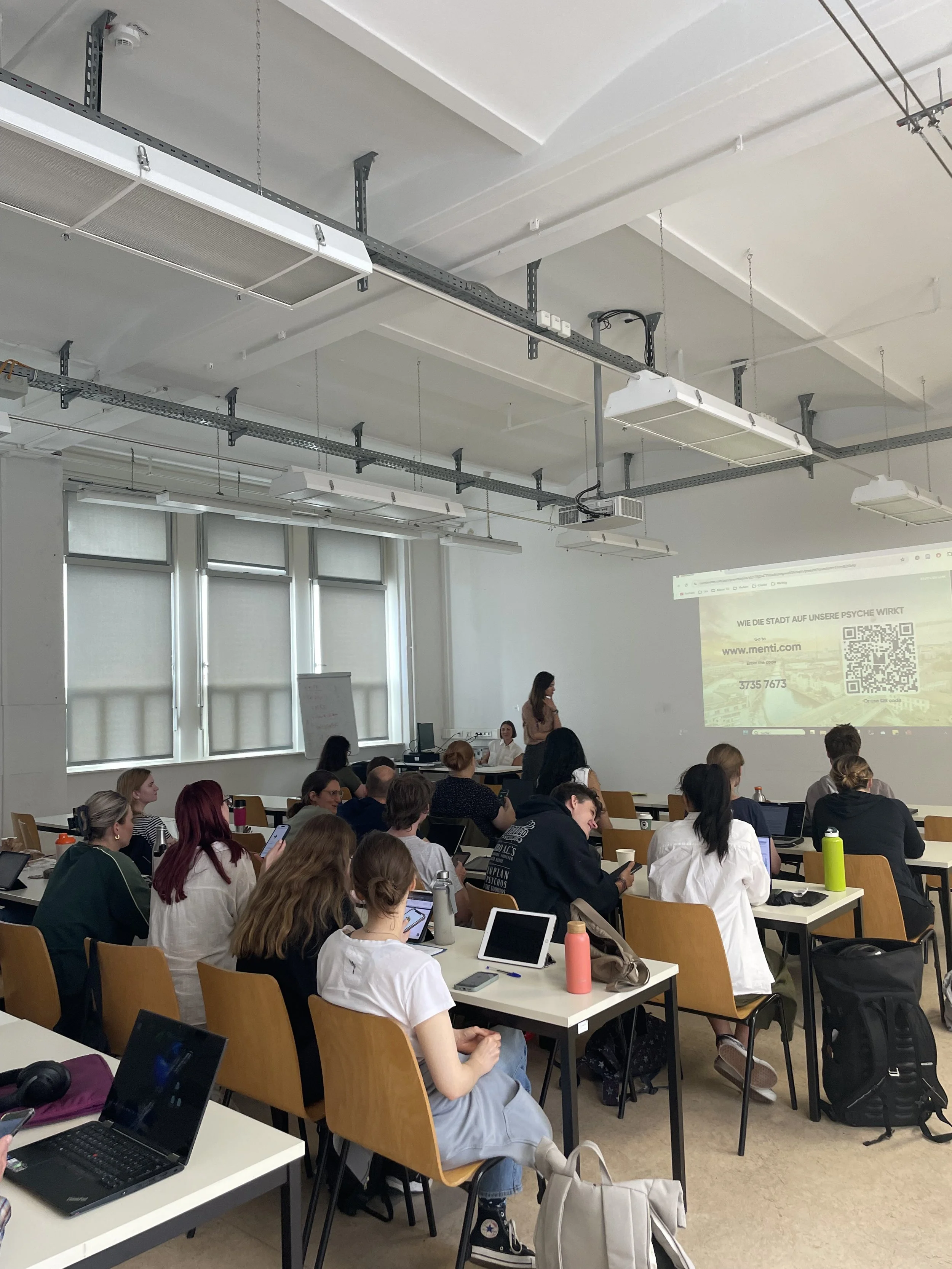
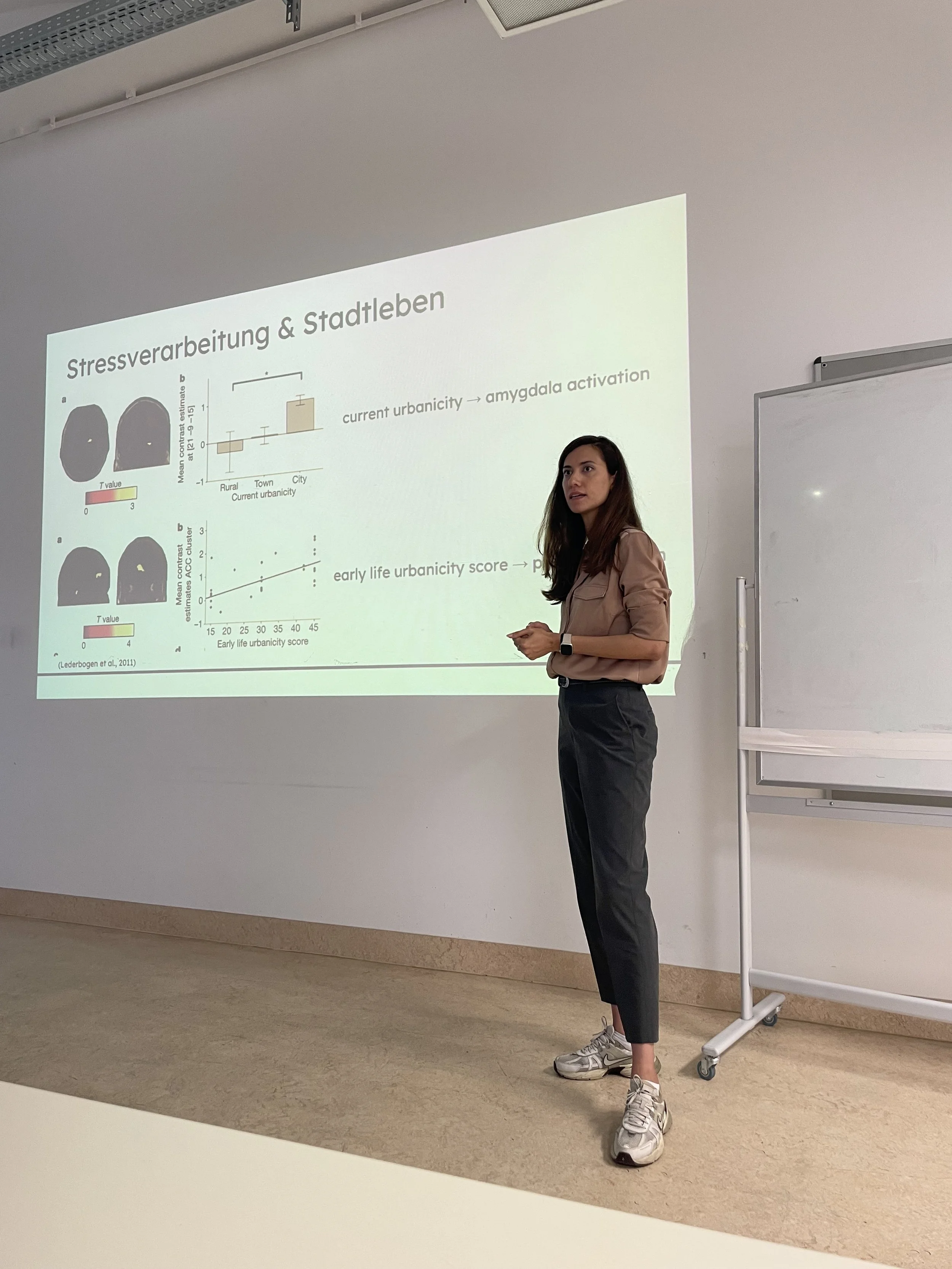
WIE DIE STADT AUF UNSERE PSYCHE WIRKT
Guest Lecture at Charité: Urban Stress and Mental Health
June 25th, 2025 at Charité - Mitte
As part of the Environment and Health module in the MScPH program at Charité, Dr. Shadi Bagherzadeh Azbari and Sephira Kolbe gave a guest lecture on the project Your Emotional City. Insights into the research background and early findings were shared, while the interactive session invited students to engage with key themes such as urban stress, loneliness, and mental well-being.
(Photo by: Cäcilia Taddia)
-
![]()
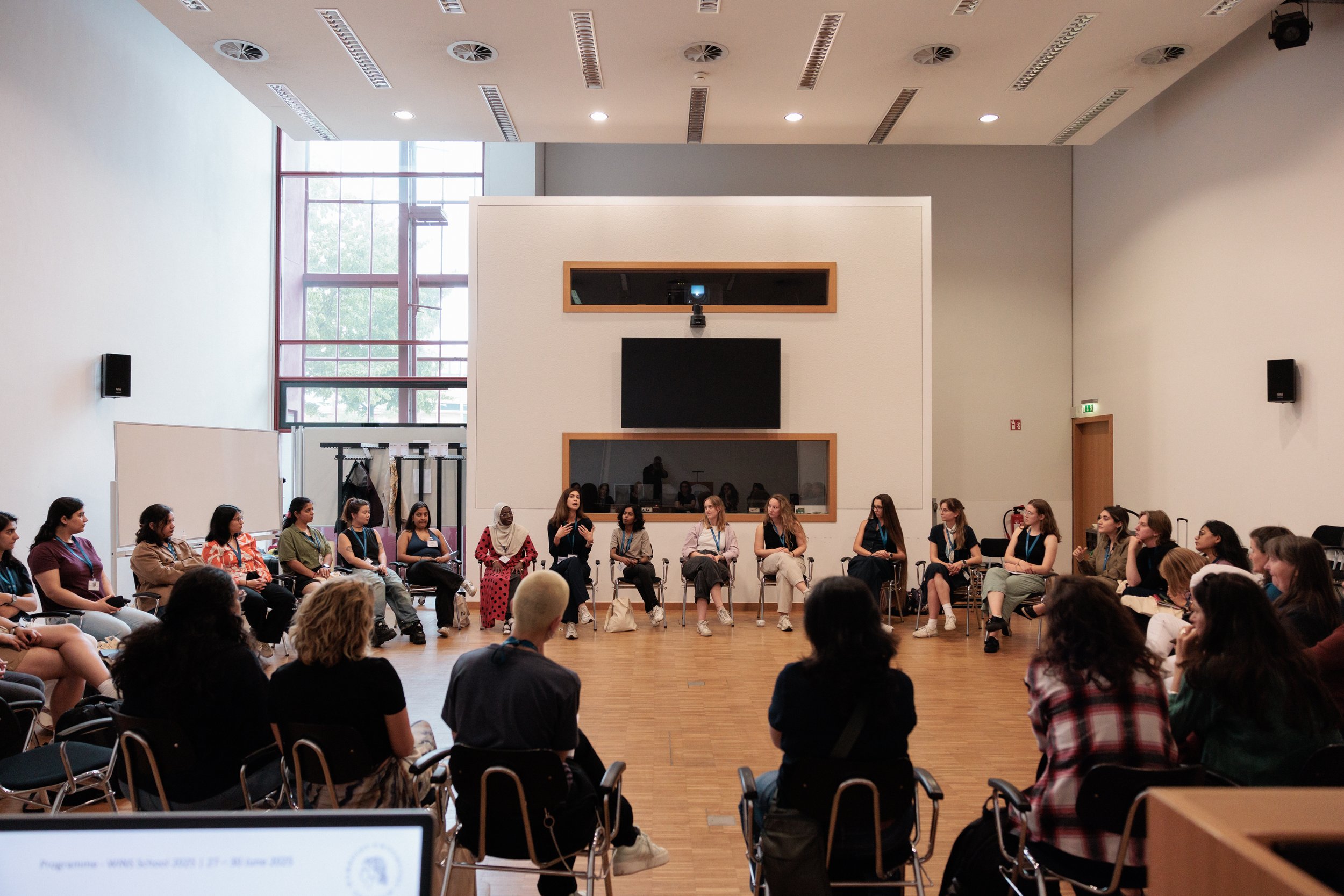
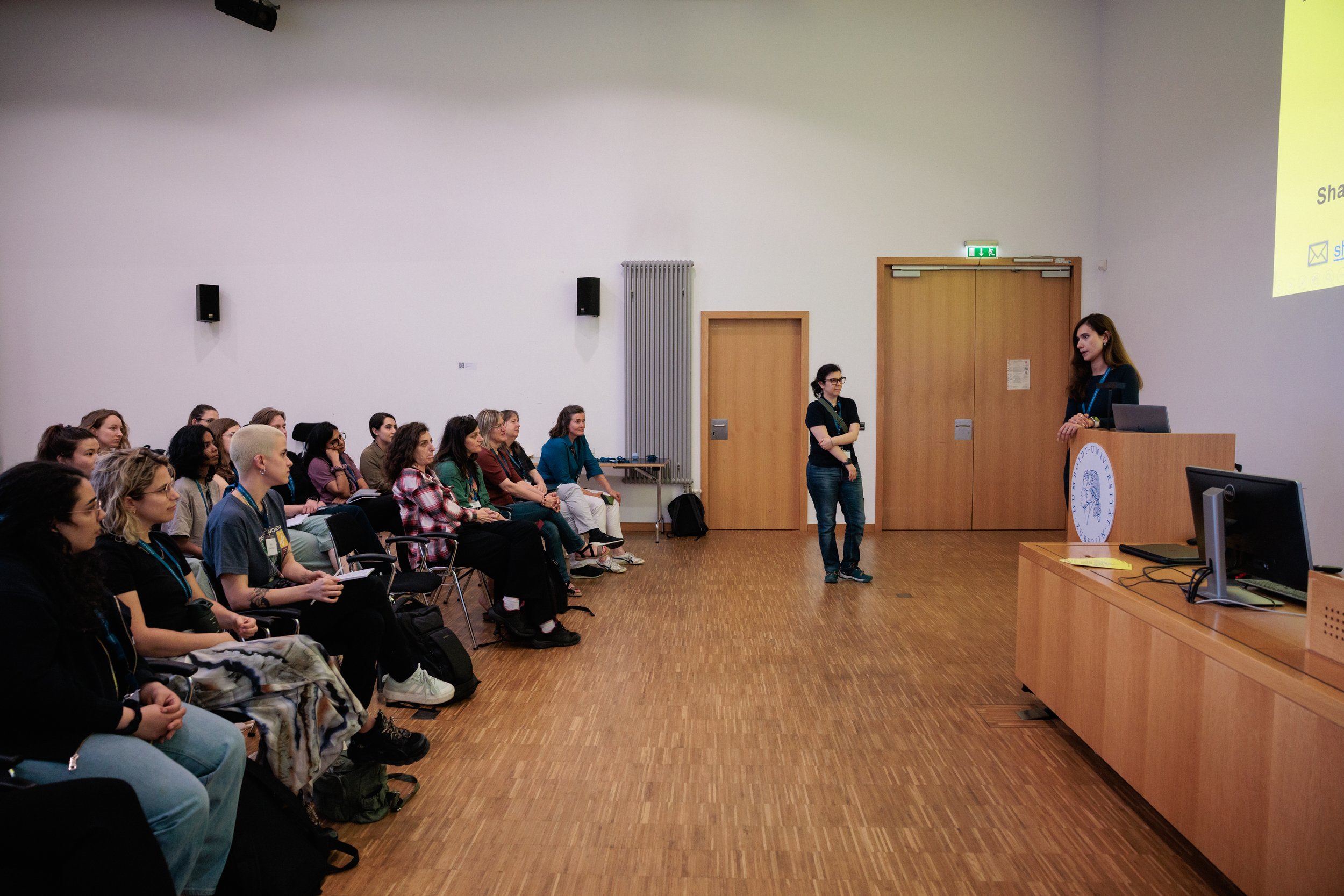
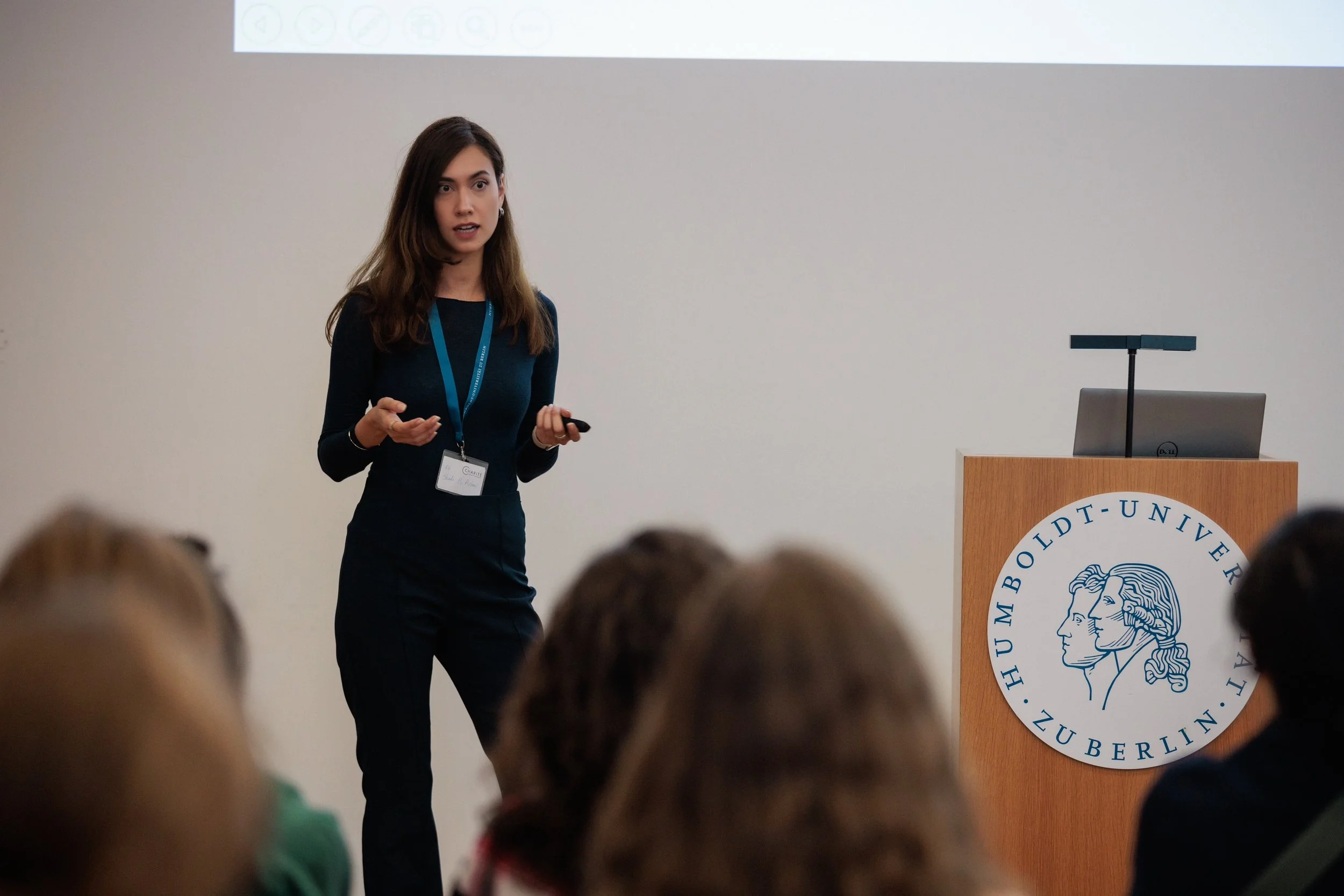
Artificial Intelligence in Science - WINS 2025
Scientific talk by Dr. Shadi Bagherzahdeh-Azbari
June 27th, 2025 at Humboldt-University of Berlin - WINS School
As part of the WINS School 2025, various talks explored the role of Artificial Intelligence in science.
Dr. Shadi Bagherzadeh-Azbari gave a presentation on “Your Emotional City: How Digital Tools and AI Inform Urban Well-Being.”(Photo by: Philipp Plum | HU Berlin)
-
![]()
Berlin 2050: Wie sieht die gesunde Stadt der Zukunft aus?
Workshop with Sephira Kolbe
August 22th, 2025 at Futurium
In this workshop, led by doctoral researcher and project coordinator Sephira Kolbe, participants developed a vision for the Berlin of the future that places the mental well-being of its residents at the center. The process was based on findings from the scientific study Deine Emotionale Stadt as well as the participants’ personal experiences. Together, they discussed how the city could be designed in 2050 to provide a healthy and livable environment.
(Photo by: Michael Schulte)
-
![]()
Psyche und Stadt
Interview with Sephira Kolbe on Radioeins RBB
August 27th, 2025 Radioeins RBB
Sephira Kolbe was interviewed on the radio, where she provided insights into the project Deine Emotionale Stadt. In the conversation, she explained the goals and background of the research, which explores the relationship between the urban environment, stress factors, and the mental well-being of Berlin’s residents.
(Photo by: jhenning)
-
![]()
Lange Nacht der Museen
Interactive stand
August 30th, 2025 at Futurium
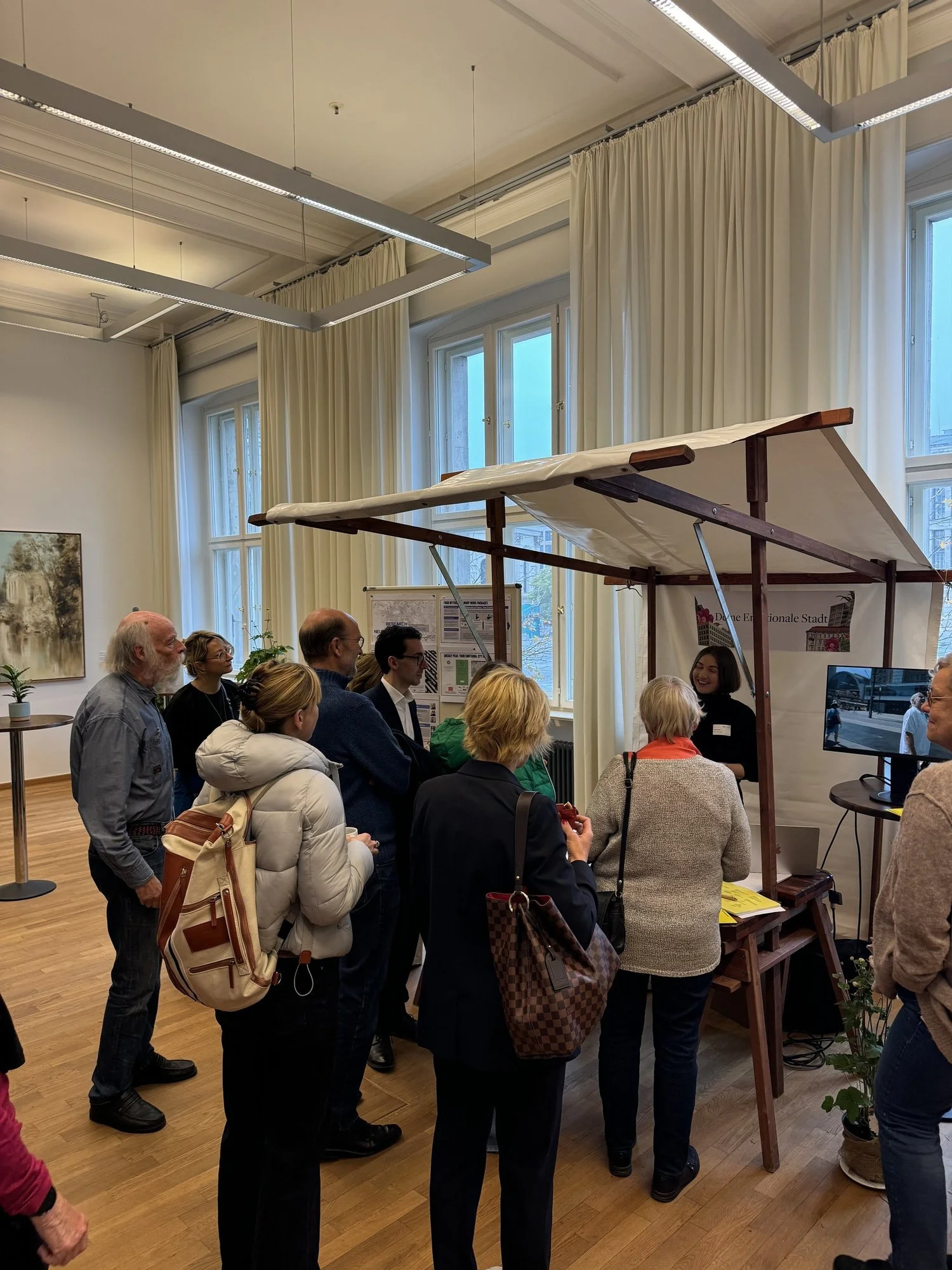
We had the opportunity to present our project ‘Your Emotional City’ during the Lange Nacht der Museen at Futurium. We engaged with visitors about the places in the city where they experience significant stress, as well as locations where they feel more relaxed. Visitors could also take part in an interactive game and riddle on mental health and stress, and we shared information about the app and its results.
(Photo by: Alina Habert)
-
![]()
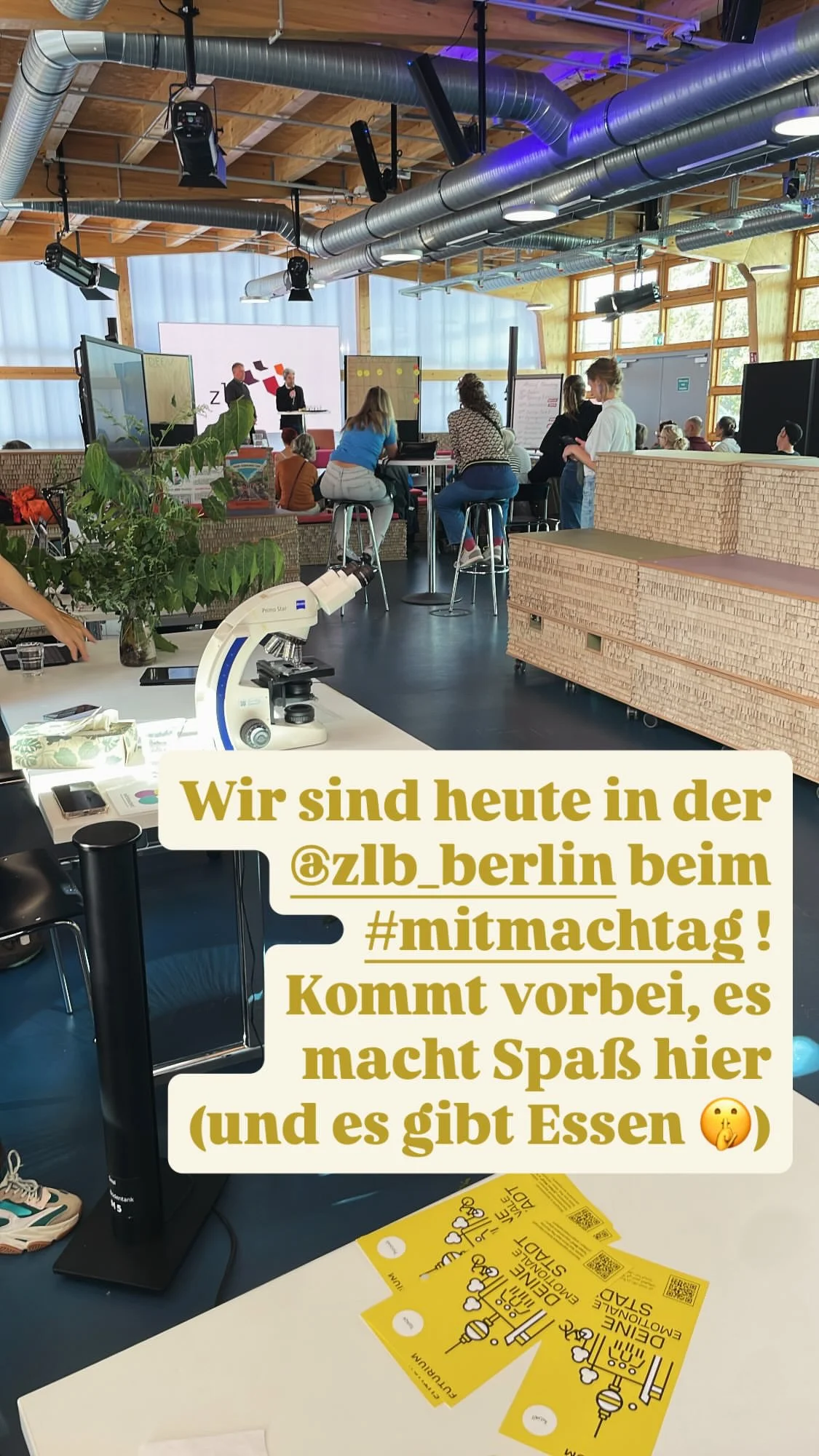
MITMACHTAG - ZLB
OpenLab with Sephira Kolbe
September 27th, 2025 at Zentral- und Landesbibliothek
To launch the “Zusammenleben” program, the ZLB pop-up hosted a participation day for Berliners. “Your Emotional City” joined workshops and info sessions on civic engagement—exploring how we live together, what keeps the city healthy, and what meaningful participation can look like.
(Photo by: Alina Habert)
-
![]()
Dein Kiez im digitalen Raum - Stadtwerkstatt
Interactive event and guest talk with Oliver Hauke and Cäcilia Taddia
November 13th, 2025 at Stadtwerkstatt Mitte
Under the motto “Dein Kiez im Digitalen Raum”, the Office for Citizen Participation in Mitte invited everyone interested to explore digital tools, platforms and projects related to civic participation, data and neighbourhood life. Our project Deine Emotionale Stadt took part with an interactive stand, and the team gave a talk on how our perception of the city can be captured digitally.
(Photo by: Cäcilia Taddia)
-
![]()
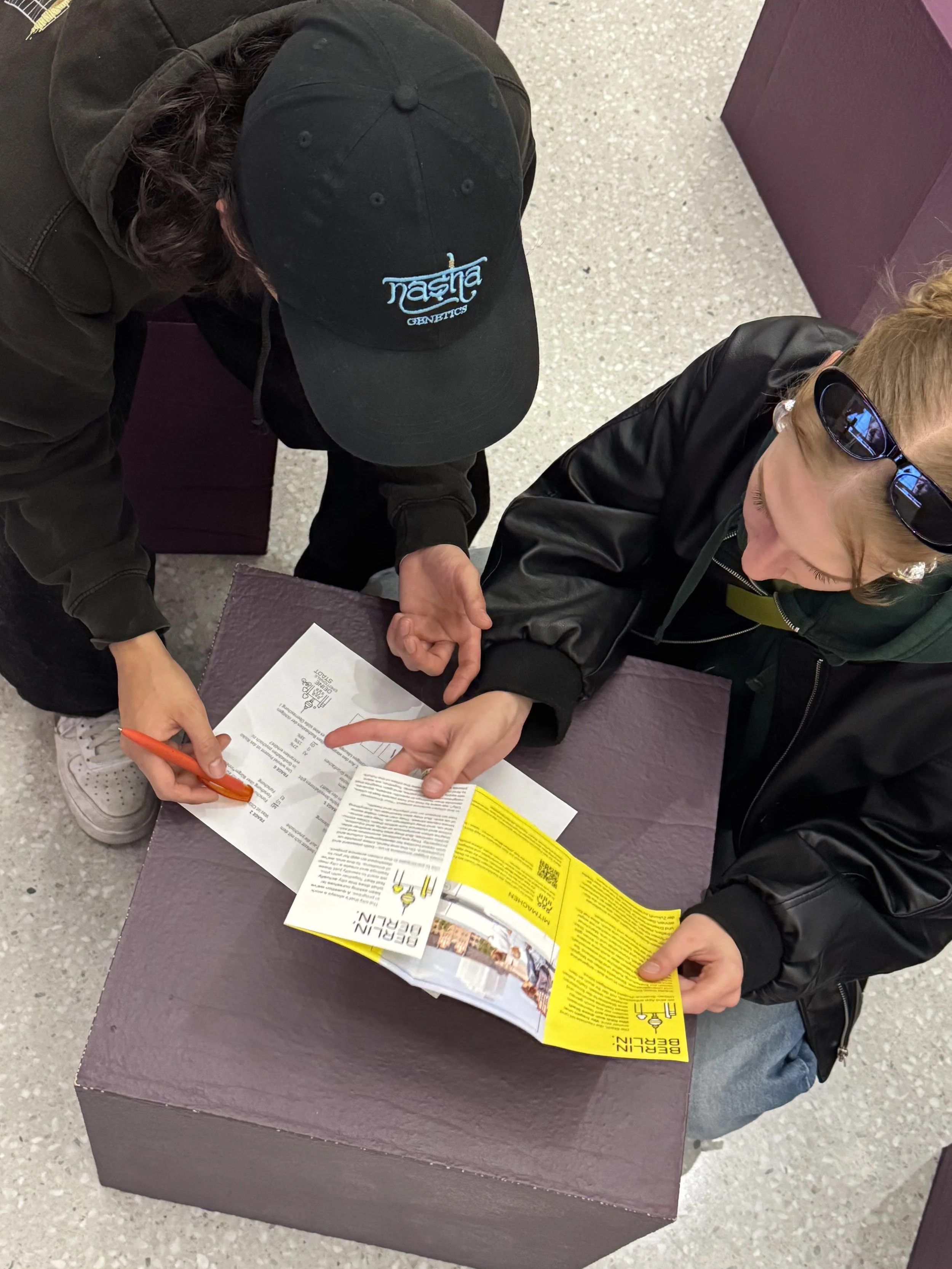
BERLIN, DU COOLE STADT
Panel discussion and Talk with Prof. Dr. Mazda Adli and Sephira Kolbe
November 03th, 2025 at Futurium
There was a panel discussion on how Berliners experience their city, including what kind of emotional reactions occur in different parts of Berlin and what contributes to liveable cities in the future. The panel consisted of Prof. Dr. Martina Löw, Prof. Dr. Mazda Adli, Sarah Wedl-Wilson and Ilona Hartmann. In addition, Sephira Kolbe gave a talk on loneliness and presented the latest project updates from “Deine emotionale Stadt”.
(Photo by: Cäcilia Taddia)
-
![]()
WALK AND TALK
Talk with Sephira Kolbe
August 22th, 2025 at VEREIN ANDERE ZEITEN
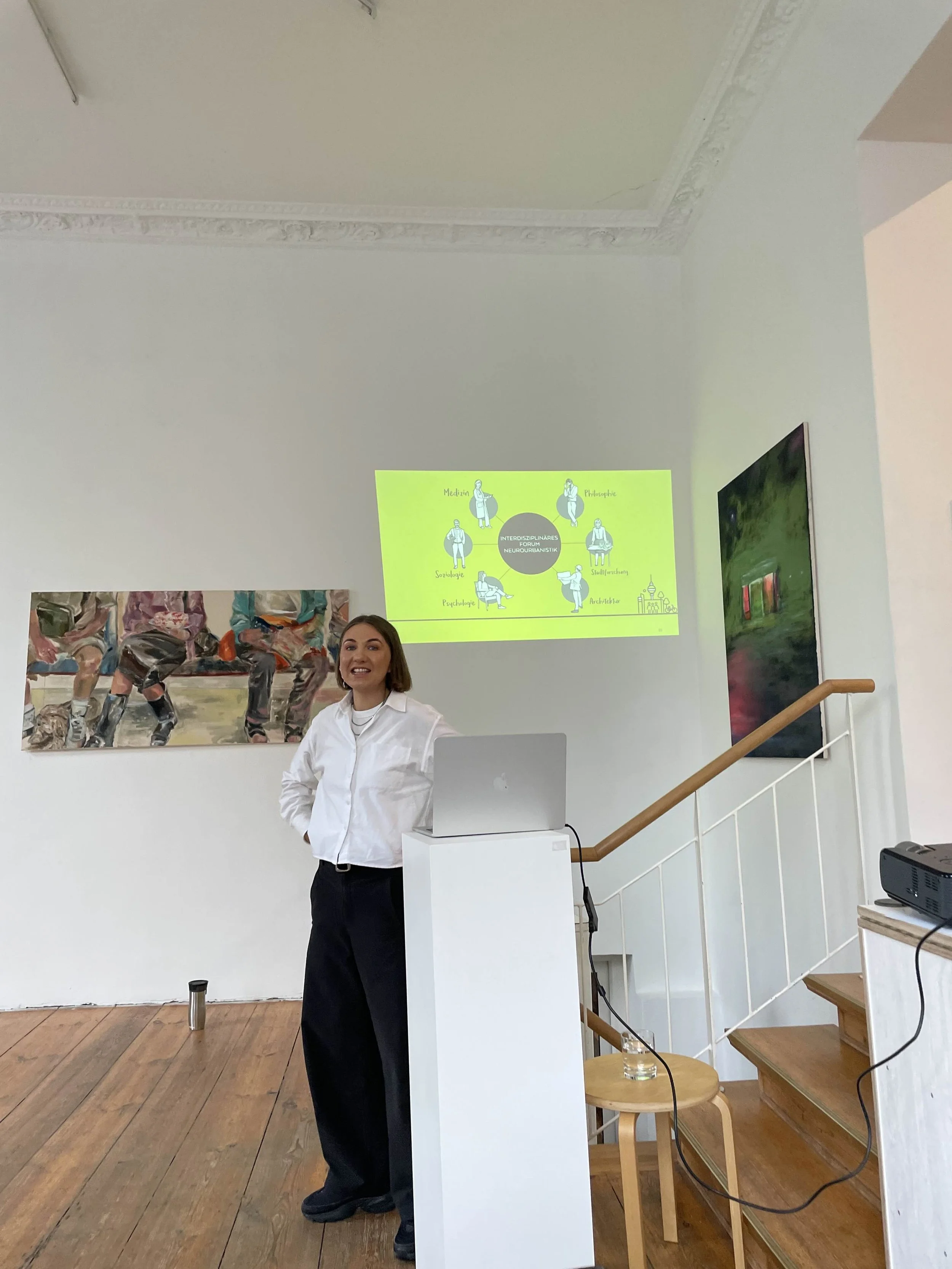
Sephira Kolbe gave a talk at Galerie Kollaborativ about the relationship between mental health and urban life. She highlighted how different aspects of the city environment can shape how we feel and cope in everyday situations, and what factors can matter most for wellbeing. Afterwards, there was time for questions and discussion.
(Photo by: Deine Emotionale Stadt)





Engagements 2024
-
![]()
Experimentallabore für Wissenschaftskommunikation - Berlin University Alliance
Guest-Talk with Sephira Kolbe
November 27th, 2024 at Senatssaal HU - Berlin
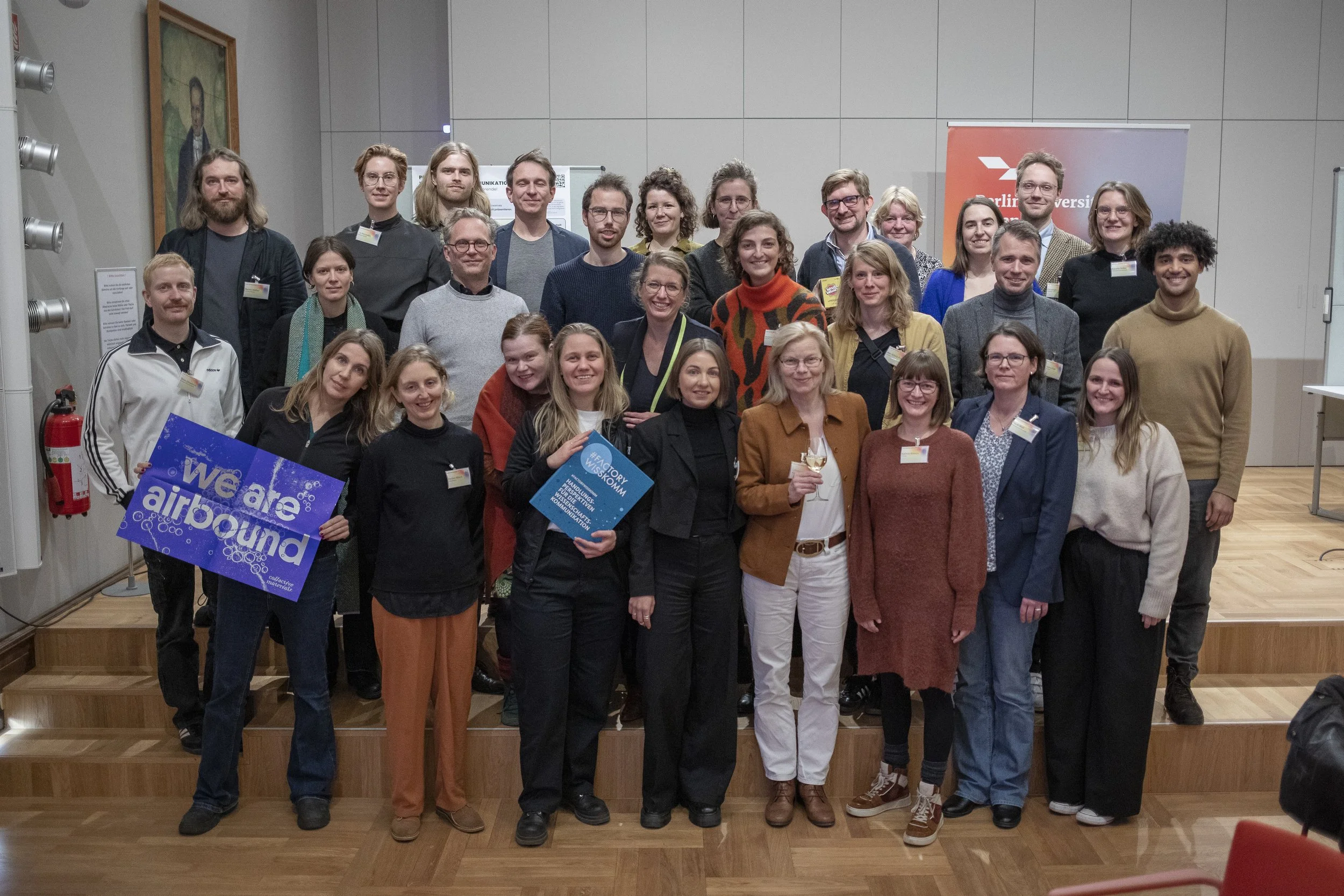
As part of the theme “Experimental Field of Knowledge Exchange: Building Bridges through Communication and Creativity”, Sephira Kolbe presented the citizen science project “Your Emotional City”. Her talk focused on the Urban Mind app, which records emotional experiences and stress factors in everyday urban life.
(Photo by: Samuel Monigatti)
-
![]()
From Lab To City: Exploring Emotions Within “Your Emotional City”’
Speech given by Dr. Shadi Bagherzadeh Azbari
November 25th, 2024 at WINS Adlershof
Dr. Shadi Bagherzadeh Azbari, Senior Researcher of “Your Emotional City,” shared insights into the project’s vision and goals and engaged in thoughtful conversations about the prospects and obstacles of urban living in the modern era.
(Photo by: Julia Baier/ HU)
-
![]()
Civic Data Community - Espresso Runde - Deine Emotionale Stadt
Guest-Talk with Dr. Shadi Bagherzadeh Azbari
November 12th, 2024 Hybrid
Dr. Shadi Bagherzadeh Azbari, was invited as a guest speaker to the Civic Data Community, where she introduced the project and talked about its goals, as well as engaging in discussions about chances and challenges of living in a modern city.
(Photo by: Donya Joshani)
-
![]()
Akademietag - 'Living in Healthy Cities – Living Healthily in Cities’
Panel-Talk with Prof. Dr. Mazda Adli
November 6th, 2024 at Akademietag
Our project ”Your Emotional City” took part in the ‘Akademietag’. As part of the motto 'Living in Healthy Cities – Living Healthily in Cities’, we introduced our project and engaged in exciting disucssions about urban living and mental health with a highlight being the Panel-Talk “Healthy City, Healthy Mind”
-
![]()
Looping Workshop with Futurium & BENN Hakenfelde
Workshop
October 30th & November 6th, 2024
Our project “Your Emotional City” launched its first “Looping Workshop” with a partnership between Futurium and BENN Hakenfelde. The first session of the two-part-Workshop began with a guided tour of the exhibition in Futurium. The second session that took place at BENN Hakenfelde,
-
![]()
Internal Colloquium - Your Emotional City
Panel-Talk with Richard Sennet
Oktober 8th, 2024
Professor of Sociology at the London School of Economics, former University Professor of the Humanities at New York University and author of "The Open City" (2019), Richard Sennet, participated in the internal colloquium with our project ‘Your Emotional City’, where together we discussed the results of our project and envisioned new strategic steps for the future.
-
![]()
Lange Nacht der Museen
Interactive Stand
August 24, 2024 at Futurium
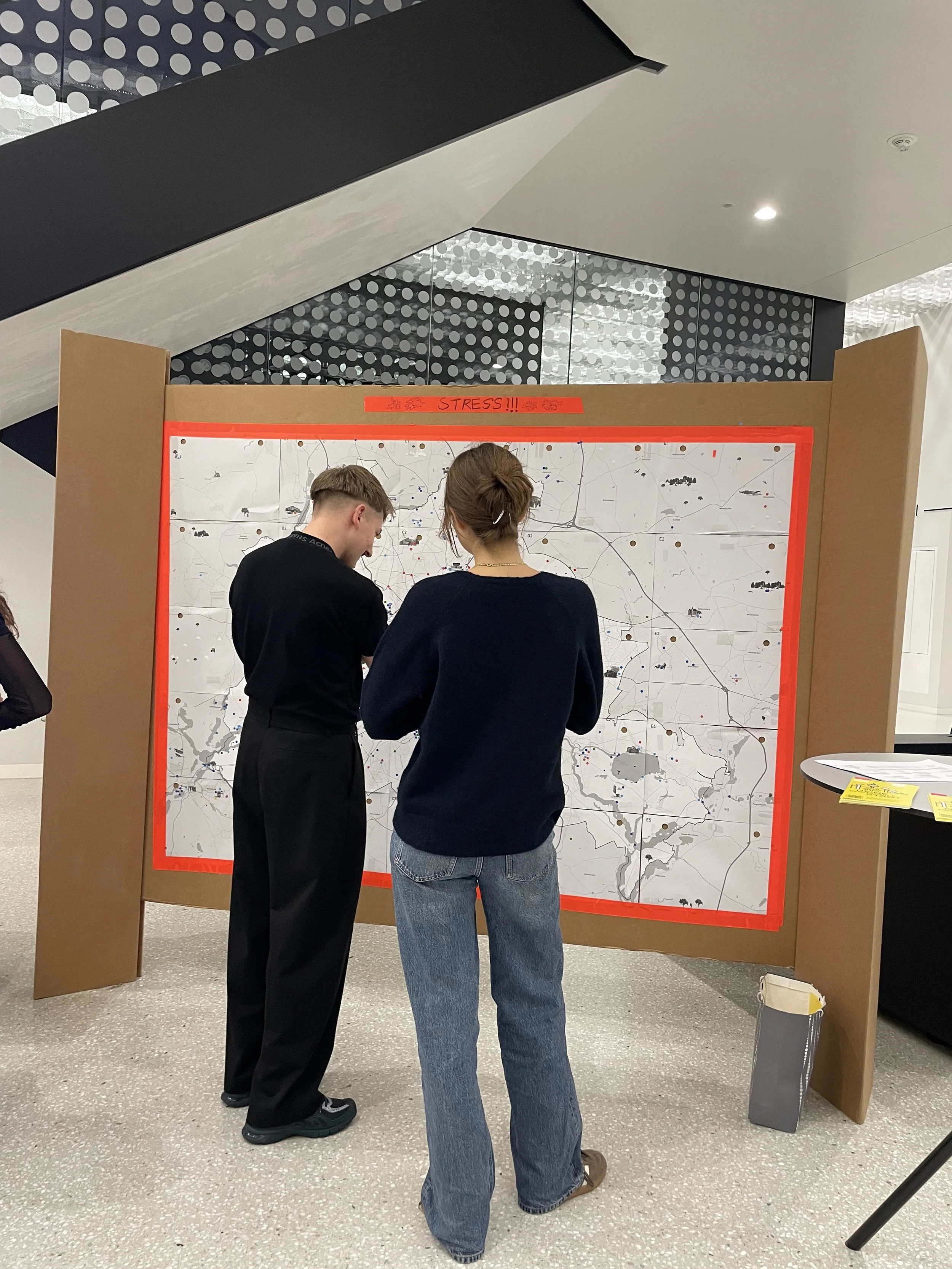
Lange Nacht der Museen took place in Berlin, and we had the opportunity to participate with our project ‘Your Emotional City’ at Futurium. A highlight of our stand was the interactive stress map of Berlin. Visitors could mark specific locations in the city, where they experienced significant stress, but also places where they feel relaxed.
-
![]()
48H Neukölln - Urban Silence
Festival participation
June 29th and 30th, 2024,
The team of ‘Your Emotional City’ was invited to be part of “48h Neukölln”. Under the theme of the 2024 festival edition, “Urban Silence”, the team encouraged contemplation of the role of mental health in urban environments and how social or architectural factors in the city may affect the stress perception of the citizens.
-
![]()
Kiezlabor - CityLab Berlin - Berlin Senate Chancellery
Kiezlabor
May 27th and 31st, 2024
The team of ‘Your Emotional City’ was part of the Kiezlabor and engaged in a variety of exchanges about the relevance of health prevention and mental well-being, as well as addressing and discussing concerns about health issues in urban districts and their implications for future initiatives and research.
-
![]()
WIE DIE STADT AUF UNSERE PSYCHE WIRKT
Workshop with Dr. Shadi Bagherzadeh Azbari and Sephira Kolbe
March 6th, 2024 at Futurium
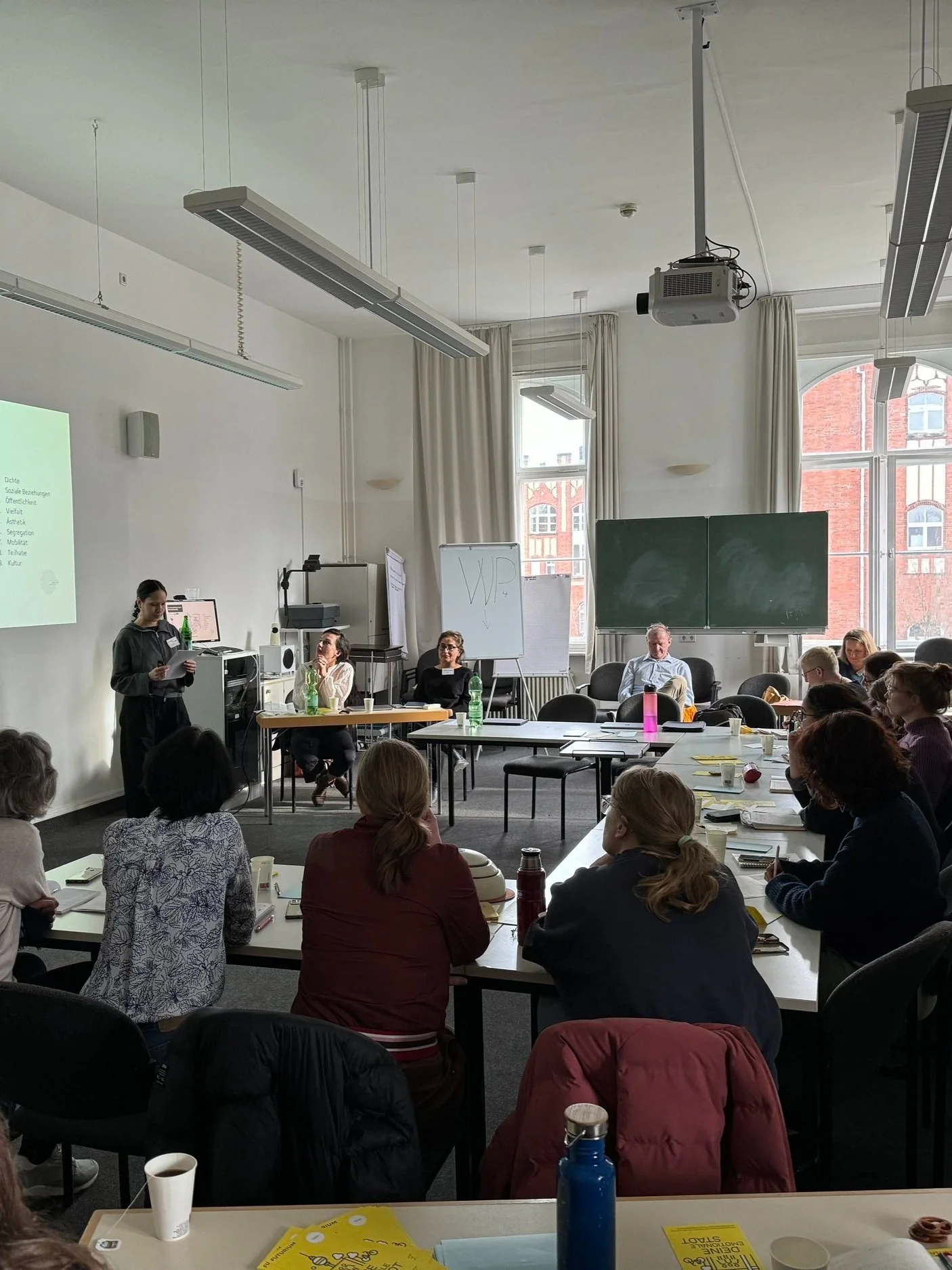
The ‘Your Emotional City’ team hosted an Workshop at Futurium, where the project's aims were presented. Attendees engaged in discussions on urban mental well-being, exploring scientific insights and initial study results. The event fostered an interactive exchange on urban development, stress, loneliness, and mental health.
-
![]()
Workshop with BENN, Quartiersmanagement and the City governance
Workshop
February 23th, 2024
Over 30 colleagues from various neighborhood initiatives, such as BENN, Quartiersmanagement, and city governance, convened in a workshop with the 'Your Emotional City' team to explore citizen science methodologies.
During the session, participants delved into recruitment strategies, identified challenges and obstacles in project dissemination and brainstormed.
-
![]()
Green and the City
Panel-Talk with with Dr. Nadja Kabisch, Holle Thierfelder, Yvonne Stolterfoht and Sephira Kolbe
October 13th, 2022
Unsere Städte werden immer dichter, viele Menschen leben auf wenig Raum, Autos schieben sich im Stop-and-Go-Tempo durch die Straßen, die Versiegelung schreitet voran. Dabei sollte es doch eigentlich heißen: Grün statt grau!
(Picture by David von Becker)





Former intern:
„As an intern with a background in psychology, I was able to gain diverse insights into scientific work processes and experience how interdisciplinary collaboration is shaped in a collaborative and open environment.“
Former intern:
"At “Deine Emotionale Stadt”, I was not only involved, but actively helped shape the project.
The internship provided me with valuable insights into mapping and research, while also strengthening my confidence in my own abilities."
Former employee:
"Working with Deine Emotionale Stadt allowed me to explore Why urban environments impact emotional well-being and to contribute to a project that bridges psychological insight with urban Planning."
Former employee:
“The project ‘Your Emotional City’ offered me an in-depth and hands-on insight into the diversity and complexity of psychological topics, enriched by the warm and professional team atmosphere. In addition to an incredible period of personal growth, I was able to experience and actively shape the project's interdisciplinary nature in practice. Thank you for the wonderful time with ‘Your Emotional City’.”
Former intern:
"The internship at Deine Emotionale Stadt showed me how impactful a work culture based on trust, transparency, and appreciation can be. It allowed me to grow both professionally and personally.”
Former Interns and Employees Of Our Project:
Dilek Keskin (Student of University of Potsdam in the field of Psychology)
Jana Schweitzer (Student of TU Darmstadt in the field of Architecture)
Louis Teber (Student of HU Berlin in the field of Psychology)
Collaboration with a student group from University of the Arts Berlin as part of a final project: Charlotte Blanke, Henrike Dietershagen, Merle von Meltzer, Michael Schulte and Selma Louise Christoph
Cäcilia Taddia
Oliver Hauke
Are you interested in how exactly we approach the data? Then visit one of our citizen science workshops, which we regularly hold together with the Futurium - House of Futures in Berlin. Under Events you can always find the next scheduled appointments.